Why Running Shoes Matter - and How to Choose the Right Pair
Discover how AiKYNETIX uses video-based gait analysis to help runners find footwear that matches their unique movement patterns.
Executive Summary
Running shoes are not passive equipment. They are force-management systems that change how force travels from the foot through the ankle, knee, and hip. That means shoe selection should not be reduced to brand preference, in-store comfort, or current market trends.
The decision should be guided by three key variables: contact angle at initial strike, heel-to-toe drop, and cushioning behavior. Together, these variables influence where force enters the body, which tissues absorb the greatest load, and how efficiently the runner moves.
Comfort will always account for roughly half of any shoe decision - and for good reason. But the other half plays a bigger role than most runners realize.
AiKYNETIX adds a critical layer that most footwear selection workflows still lack: objective gait analysis. By quantifying contact angle, joint kinematics, symmetry, and running efficiency via running power, the platform supports footwear recommendation as a biomechanics-driven decision rather than a trial-and-error consumer choice.
Key idea: A shoe is an intervention. It shifts load within the body. The same design can help one runner and aggravate another.
1. Why Running Shoes Actually Matter
At every step, runners typically experience ground reaction forces of roughly two to three times body weight. The shoe therefore becomes the first external interface between the athlete and the ground. From a biomechanics perspective, its job is not only to soften impact but also to guide how the body accepts, redirects, and reuses force.
Three functions are especially important:
- Impact attenuation through foam or other midsole structures
- Load distribution across the ankle, knee, and hip
- Gait modulation through contact mechanics and shoe geometry
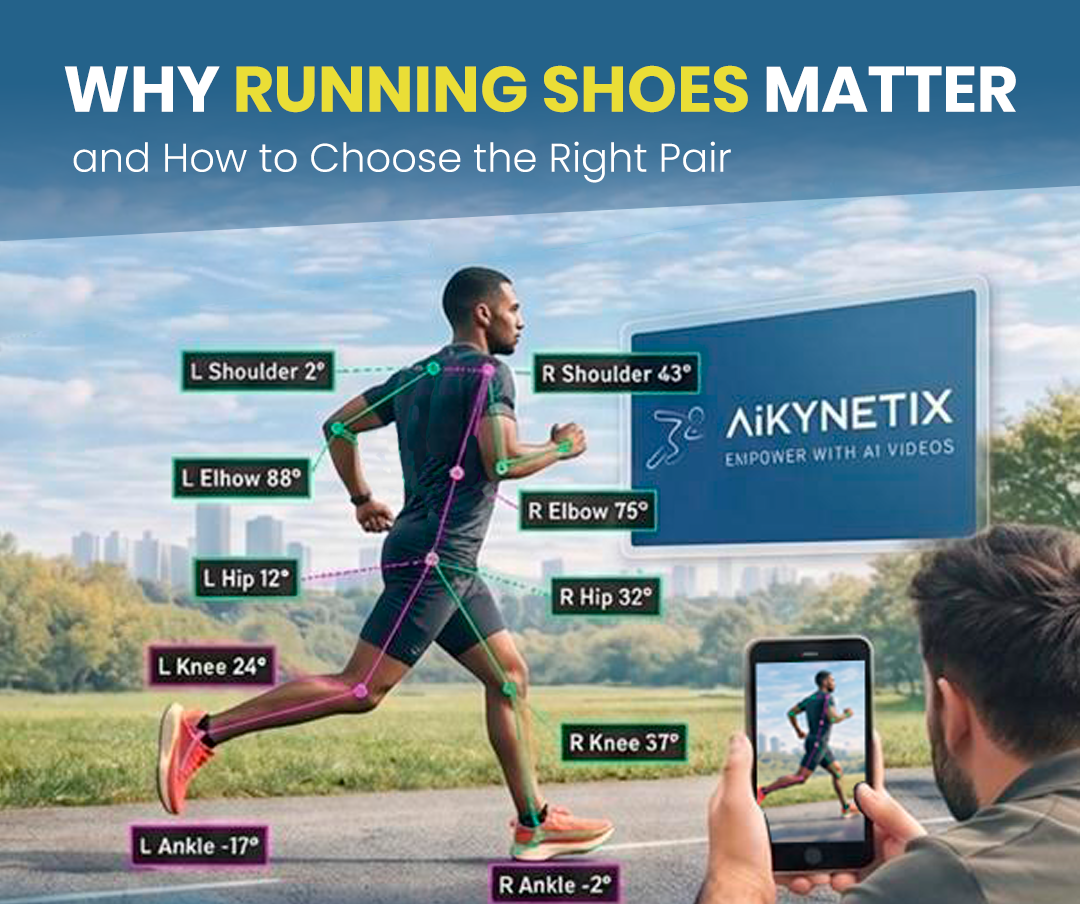
Fig 1. AiKYNETIX Outdoor Gait Capture. This exhibit frames shoe selection in the context of observable movement. The overlaid values indicate that footwear recommendation should follow an understanding of joint behavior, contact angle, and movement efficiency in the actual running task.
2. Contact Angle: The Starting Point of Shoe Selection
Contact angle refers to the orientation of the foot at initial ground contact. This is one of the most important variables because it determines where force first enters the system.
- Higher contact angle → more pronounced rearfoot or heel strike → shifts loading upstream toward the knee and hip
- Lower contact angle → midfoot or forefoot contact → places more demand downstream on the ankle complex, calf, and Achilles tendon
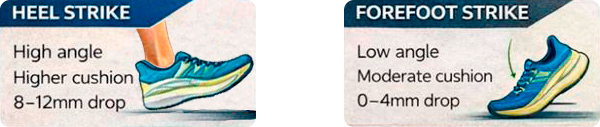
Fig 2. Strike Mechanics. Heel-strike and forefoot-strike patterns. A heel-strike illustration is only valid if the heel is clearly the first contact point, with the forefoot elevated relative to the ground at initial strike.
The shoe should support the way the runner actually contacts the ground rather than forcing a mismatched pattern. Contact angle also helps interpret symmetry and consistency from step to step.
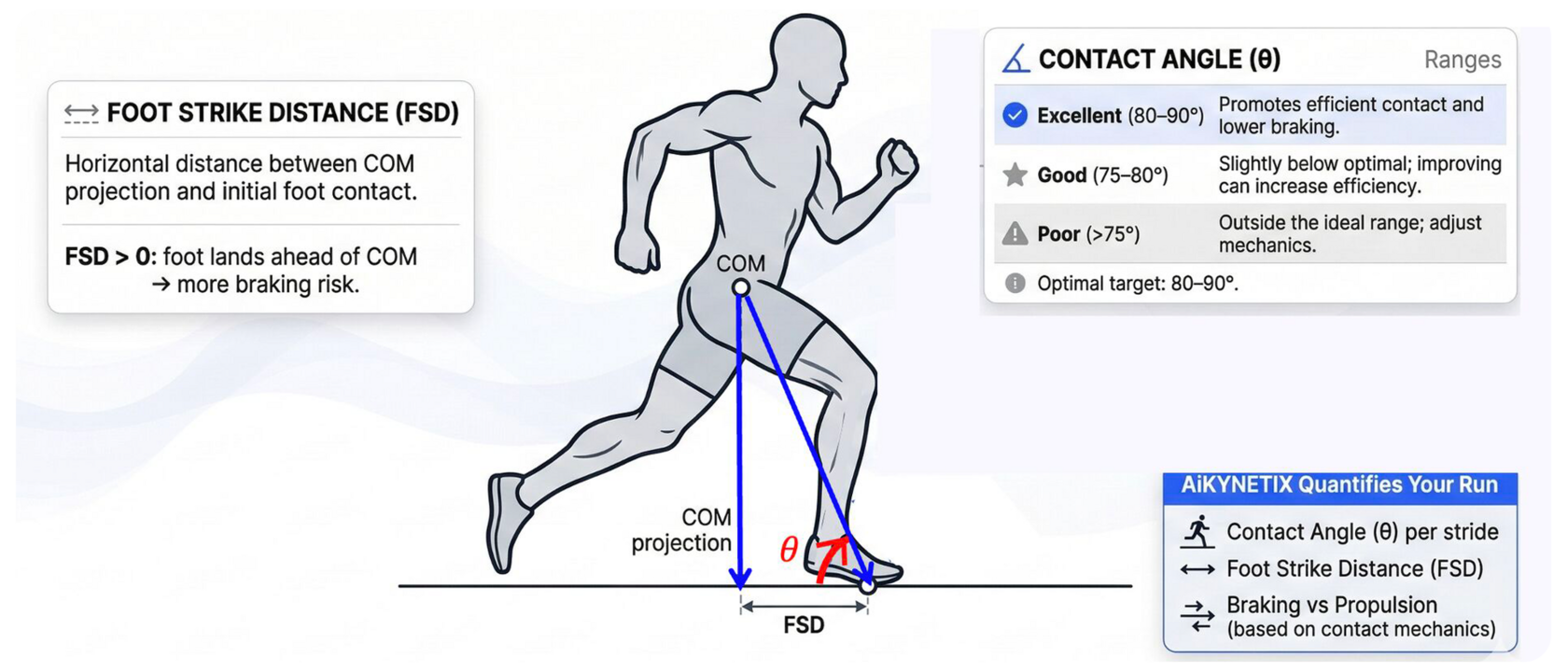
Fig 3. Contact angle and foot strike distance determine where force enters the body and how much braking occurs at each step. AiKYNETIX quantifies both to help match footwear to individual gait mechanics.
3. Heel-to-Toe Drop: How Shoe Geometry Changes Gait
Heel-to-toe drop is the difference in height between the heel and forefoot. This geometry changes the position of the foot and influences how easily a runner arrives in a heel-first or more forward contact pattern.
| DROP RANGE | CATEGORY | BIOMECHANICAL EFFECT |
| 0–4 mm | Minimal / Low drop | Preserves or encourages midfoot/forefoot mechanics; increases demand on calf-Achilles complex |
| 5–8 mm | Moderate drop | Middle-ground option; balances both patterns |
| 8–12 mm | Traditional / Higher drop | More compatible with heel-strike patterns |
Drop should not be chosen ideologically. It should be chosen based on the runner’s mechanics and tissue tolerance.
4. Cushioning: Protection, Perception, and the Trade-Off
Cushioning is often discussed as if more is always better. The reality is more nuanced:
- More cushioning can reduce harshness at impact and improve comfort perception
- Excessive cushioning can decrease ground feel and reduce control for some runners
- Cushioning choice should be linked to contact pattern, stability, and efficiency, not comfort alone
A softer shoe may protect one runner while blunting useful feedback in another. For example:
- A runner who lands aggressively on the rearfoot may benefit from more heel-side cushioning
- A runner who depends heavily on forefoot control may perform better with a more moderate or firmer platform that preserves sensory feedback.
5. What AiKYNETIX Adds: From Observation to Measurement
The strongest part of the AiKYNETIX approach is that it does not stop at descriptive language like "heel striker" or "efficient runner." It turns those ideas into measurable outputs.
From a simple side-view video, the platform analyzes:
- Contact angle at initial strike
- Joint kinematics including ankle, knee, and hip behavior
- Running efficiency via running power
- Movement quality factors such as symmetry, alignment, and stability
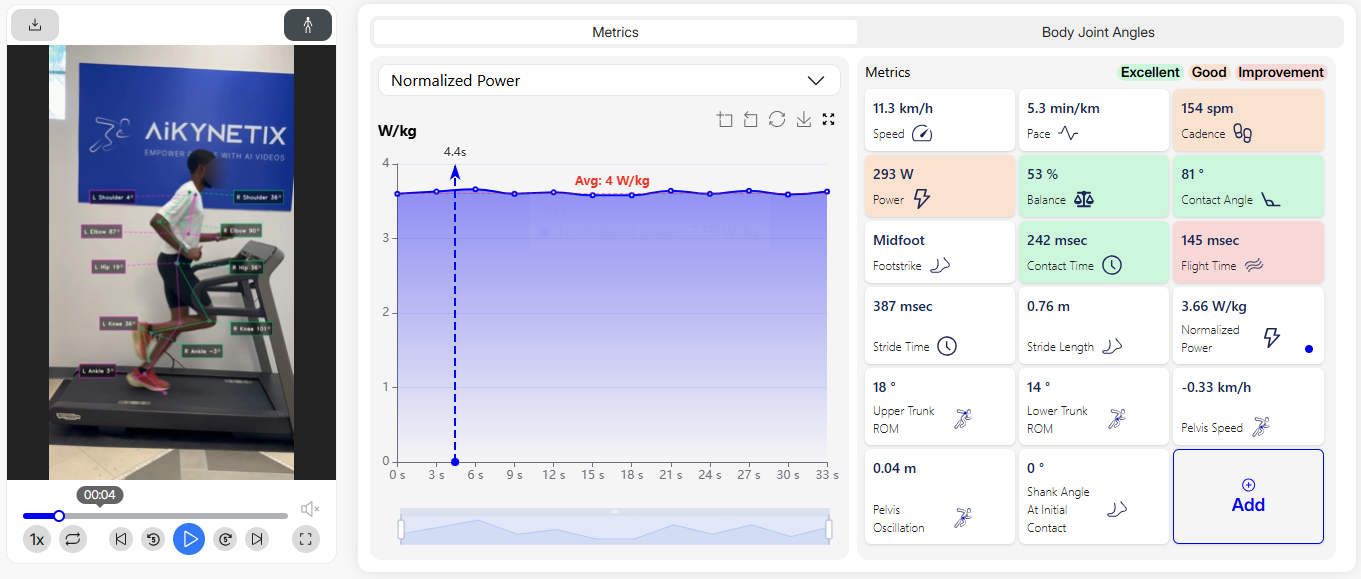
Fig 4. A sample running analysis report from AiKYNETIX. Metrics like Normalized Power (W/kg), Contact Angle, Cadence, and Balance transform raw video into actionable biomechanical data for footwear selection.
This matters because footwear recommendation becomes more defensible when it is tied to quantified movement. Instead of saying a runner looks like they need more cushioning, the practitioner can connect the recommendation to measured contact behavior and efficiency markers.
6. Clinical Translation: From Runner Profile to Footwear Decision
| Runner Pattern | Primary Concern | Shoe Features to Prioritize | Why It Helps |
| Rearfoot runner with high contact angle | Higher knee loading; reliance on heel-side impact management | Moderate/high drop (8–12 mm), heel cushioning, stable platform | Supports heel-first landing pattern; helps manage impact where the runner actually enters the ground |
| Mid/forefoot runner | Greater ankle and Achilles demand | Lower drop (0–6 mm), moderate cushioning, flexible forefoot | Preserves forefoot mechanics; avoids unnecessary shift toward heel striking |
| Runner with poor control / instability | Energy leak, inconsistent loading, reduced movement efficiency | Stable shoe, moderate stack, predictable platform | Improves control; reduces excessive motion that can compound inefficiency |
| Over-cushioned runner with reduced ground feel | Blunted proprioception; poor contact awareness | Less extreme stack height, more balanced cushioning | Restores feedback from the ground; comfort does not come at the expense of mechanics |
7. Indoor vs. Outdoor Context
The source material also makes an important environmental point:
- Indoor assessment (especially on a treadmill) offers controlled conditions and repeatable data collection
- Outdoor running introduces surface variability and more natural movement behavior
Both contexts matter. A shoe that feels appropriate on a treadmill may behave differently outdoors, especially in relation to stability and proprioception. The ideal workflow is to use controlled analysis for baseline measurement and then interpret the findings in the context of real-world running conditions.
8. Key Figures and Values to Retain
Several figures from the material anchor the narrative in concrete ranges rather than general opinion:
| PARAMETER | VALUE / RANGE |
| Ground reaction force estimate | Roughly 2–3× body weight during running |
| Low / minimal drop range | 0–4 mm |
| Higher traditional drop range | 8–12 mm |
| Primary AiKYNETIX outputs | Contact angle + running efficiency via running power |
9. Final Takeaway
The core message should remain intact: running shoes are interventions that shift load within the body. They do not simply absorb impact in a generic way. They change how a runner interacts with the ground, how force is distributed, and which structures take the greatest mechanical demand.
For that reason, the best shoe is not the softest, the lightest, or the most fashionable. The best shoe is the one whose geometry and cushioning profile match the runner’s contact angle, loading pattern, stability needs, and efficiency profile.
That is exactly why AiKYNETIX is strategically relevant in this conversation.
Key Learning Points
- Running shoes should be treated as biomechanical interventions, not generic comfort products
- Contact angle is a primary decision variable because it determines where force enters the body
- Heel-to-toe drop changes foot inclination and can encourage or discourage certain strike patterns
- Cushioning must be matched to gait and control demands; more is not automatically better
- AiKYNETIX strengthens shoe selection by combining contact angle, movement quality, and running efficiency via running power
- Indoor and outdoor running contexts should both inform final recommendation
AiKYNETIX transforms a simple smartphone video into objective biomechanical data - helping runners and professionals choose footwear with confidence, not guesswork.
Want more tips like this?
📬 Subscribe to our newsletter for more practical guides!
📊 Start your free trial at aikynetix.app
📥 Got questions? Drop us a line: info@aikynetix.com
Find us in the socials:
Facebook | Instagram | X | Telegram | LinkedIn | Strava | YouTube