The Bodyweight Squat: What AI-Powered Data Taught Me About Movement (And Why Our Eyes Miss More Than We Think)
This is the story of one squat assessment, and why tools like AiKYNETIX are changing how we coach, treat, and rehabilitate.
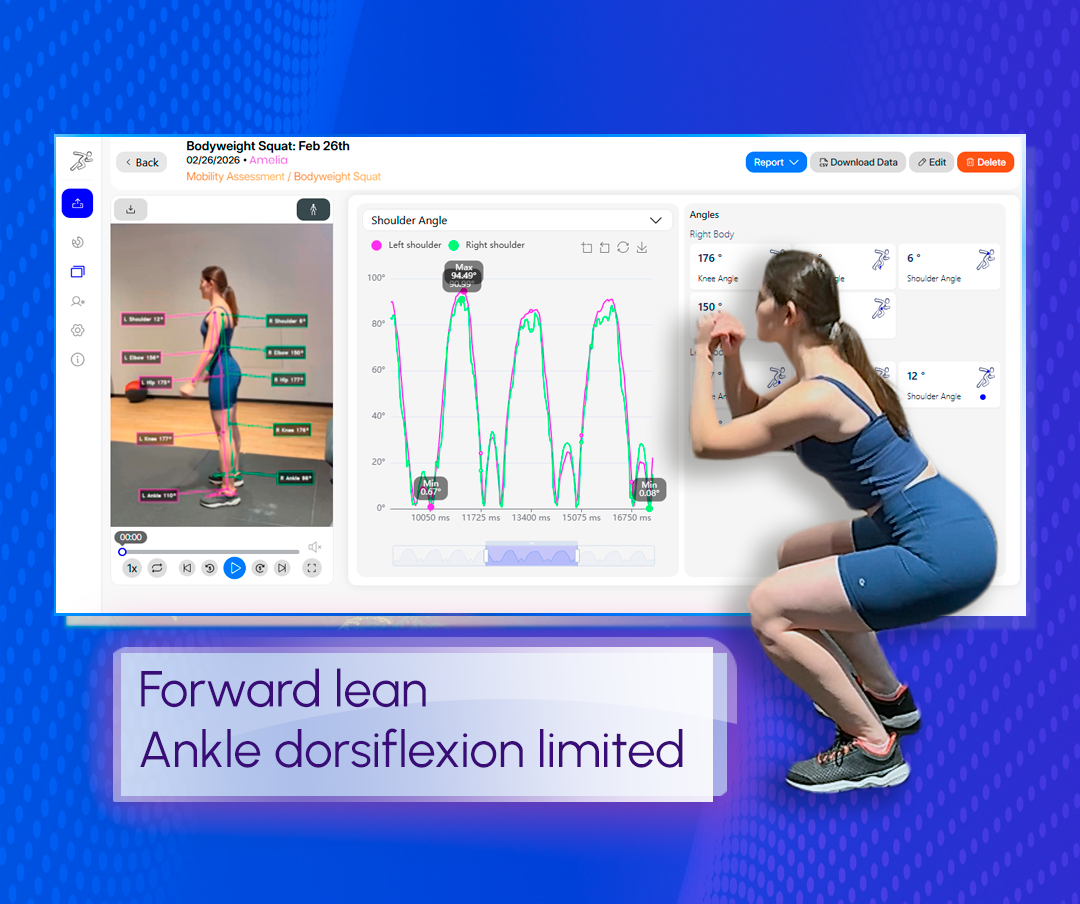
This is the story of one squat assessment, and why tools like AiKYNETIX are changing how we coach, treat, and rehabilitate.
Part 1: The Bodyweight Squat – A Window Into Human Movement
The bodyweight squat is deceptively simple. You stand, you sit back, you stand up. But beneath that simplicity lies one of the most useful global movement screening tools available in sports medicine and performance.
Why it matters
The squat is a fundamental human movement pattern. We squat to sit, to lift, to play. Changes or limitations in this pattern can influence how other movements are performed, especially under load or fatigue.
In sports performance, coaches use the bodyweight squat to assess:
- Athletes in training – Is a basketball player loading through his hips efficiently for his structure and sport? Can a soccer recruit maintain core stability under load?
- Return-to-play readiness – After a hamstring or ACL injury, can the athlete control descent and demonstrate consistent movement strategy?
- Baseline movement quality – Before adding weight, we need to know: can you move your own body well?
In physical therapy and rehabilitation, the bodyweight squat is a standard screening and assessment tool for:
- Post-injury patients recovering from knee, hip, or low back issues.
- Older adults at risk of falls, where squat and sit-to-stand performance relate to functional independence.
- Pre-surgical and post-surgical populations – Can they safely perform a sit-to-stand after a knee replacement?
In clinical research, the squat is used to quantify asymmetry, range of motion, and motor control across populations - from elite athletes to geriatric patients.
What the squat reveals
A well-executed squat typically requires:
- Ankle dorsiflexion (allowing knees to travel forward as needed)
- Knee control (avoiding excessive valgus collapse)
- Hip flexion (adequate depth without excessive compensation)
- Lumbar-pelvic control (maintaining a coordinated relationship between pelvis and spine)
- Trunk positioning (appropriate for the individual’s anthropometrics and strategy)
- Symmetry (relative balance between limbs, acknowledging some natural variability)
When these elements are limited or inconsistent, the body may adopt alternative movement strategies. In some contexts - especially under high load, fatigue, or repetition - these strategies may contribute to increased mechanical stress.
Part 2: The Athlete – Amelia
Amelia is 25, active, and came in for a routine movement screen. Nothing special - just a healthy young woman wanting to understand her body better. We set up a simple smartphone camera, filmed her doing 10 bodyweight squats from a side view, and let AiKYNETIX do the rest.
What came back surprised even us.
Image 1: Rep #1 (left) looks clean. Rep #5 (right) shows forward trunk lean and asymmetry.
At first glance, her squats appeared generally well-controlled, with no obvious pain or major breakdowns. However, when we compared the video with objective data, more subtle differences between repetitions became apparent.
Part 3: What the Data Revealed
Hip Range of Motion
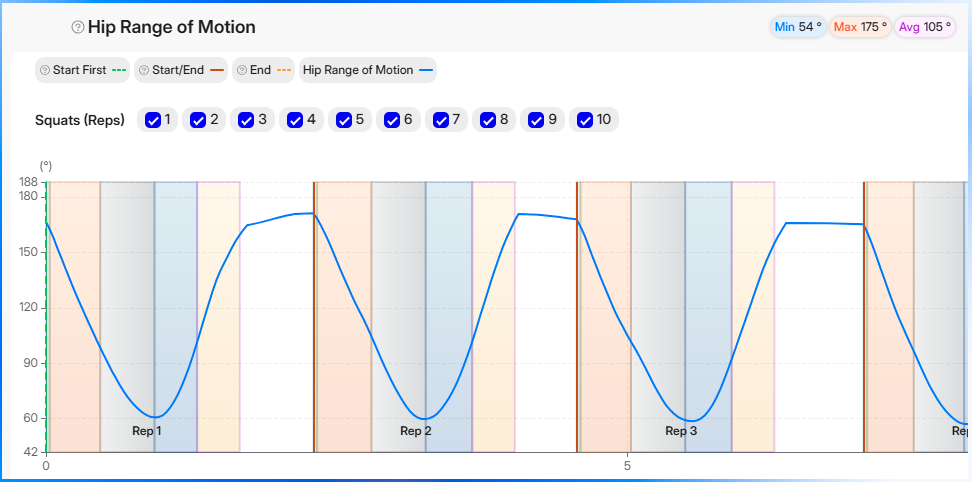
Image 2: Hip range of motion across 10 reps – variability is observed between repetitions.
The numbers: Average 105°, but ranging from 54° to 175°. A 121° swing.
What that means: This level of variability across repetitions may be meaningful, although interpretation depends on measurement definitions, task consistency, and expected variability. Some repetitions showed reduced depth, while others reached greater depth, potentially involving different movement strategies. This may reflect inconsistent motor control, changing strategy between reps, or variability in how the movement was performed.
Hip Symmetry
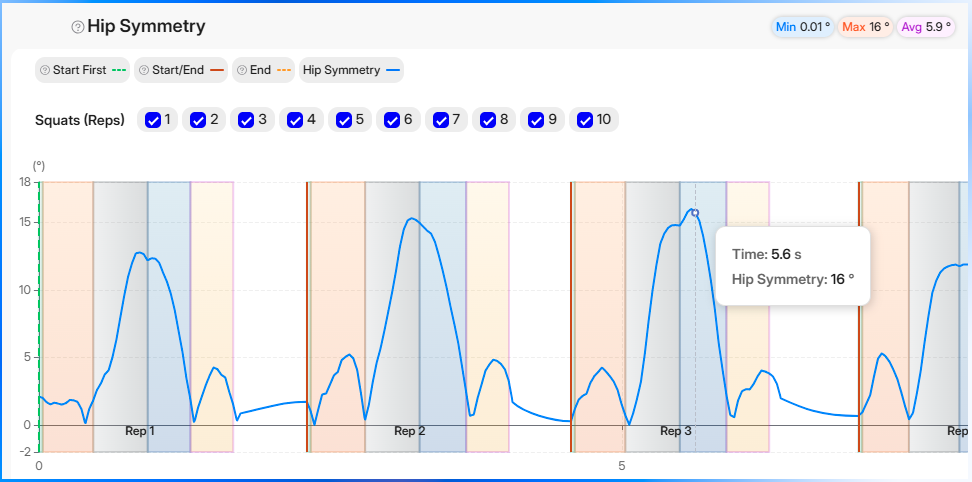
Image 3: Hip asymmetry increases at Rep #3 – a difference that may warrant further observation if consistent.
The numbers: Average 5.9° asymmetry, but Rep 3 hit 16°.
What that means: This level of asymmetry may warrant closer observation, particularly if it is consistent across trials or associated with symptoms. The movement pattern suggests a potential shift in contribution between limbs, although joint angles alone do not directly quantify loading. In some contexts, persistent asymmetry may contribute to uneven loading patterns over time - especially in a young active female.
Trunk Angle
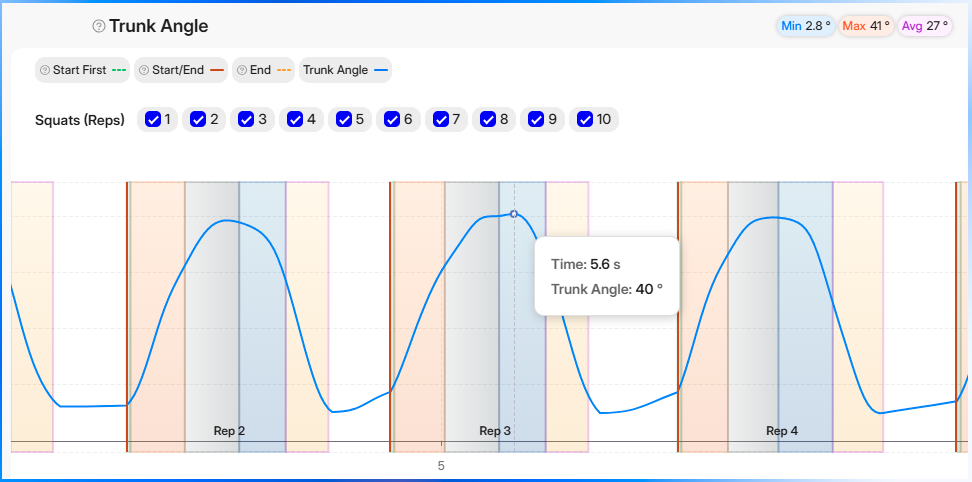
Image 4: Trunk angle increases in Reps #3–4 – reflecting a more trunk-dominant movement strategy in those repetitions.
The numbers: Average 27°, but Rep 3 peaked at 40° forward lean.
What that means: These reps show a more trunk-dominant strategy compared to her baseline. This resembles a more hip-dominant pattern relative to her other repetitions. Such a pattern can be associated with factors such as ankle mobility, strength distribution, or individual squat strategy. In these cases, the body may shift load posteriorly to achieve depth.
Pelvic Tilt ("Butt Wink")
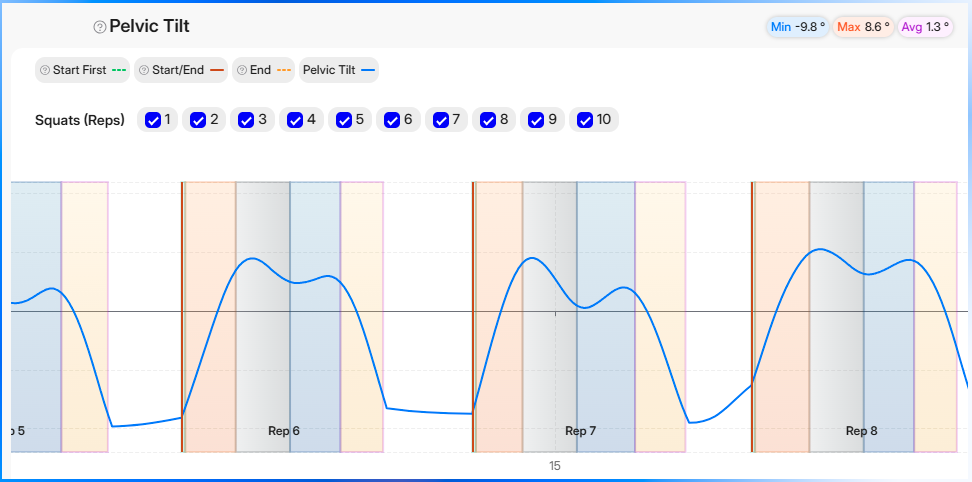
Image 5: Posterior pelvic tilt is observed at the bottom of the squat, indicating a change in lumbopelvic position at deeper ranges.
The numbers: Negative values at the bottom, especially Reps #7–8.
What that means: Posterior pelvic tilt is observed at deeper ranges of motion. This reflects a change in lumbopelvic position. Its relevance depends on load, symptoms, and individual tolerance. If load is added, it may be useful to monitor how this pattern behaves under increasing demand.
Part 4: What This Means for Each Professional
For the Coach (Performance & Strength)
"She may benefit from improving consistency before progressing load"
Before adding external load, it may be useful for her to develop a more consistent and repeatable movement pattern. The observed variability suggests that her squat strategy changes across repetitions. Loading at this stage may reinforce those existing patterns rather than refine them.
Your action plan:
- Tempo squats (3-0-3) to improve movement awareness and control.
- Box squats to encourage consistent depth and positioning.
- Address hip and ankle mobility as needed within warm-ups.
- Incorporate trunk and hip stability exercises to support control.
For the Physical Therapist (Clinical Rehab)
"These findings may justify a closer clinical assessment of lower extremity and lumbopelvic function"
The observed asymmetry and trunk positioning suggest a potential difference in movement strategy between limbs, along with a relatively more posteriorly oriented squat pattern. While these findings are not diagnostic, they may guide further clinical evaluation - especially if the individual presents with symptoms.
Your action plan:
- Assess ankle dorsiflexion range of motion bilaterally.
- Evaluate hip strength (particularly abductors and external rotators).
- Screen overall movement strategies across related tasks (e.g., single-leg squat, step-down).
- Consider lumbopelvic control and coordination during dynamic movement.
For the Rehab Specialist (Return-to-Sport / Post-Injury)
"If this were a post-injury athlete, these findings could justify further return-to-sport testing"
The asymmetry and variability suggest that movement consistency - especially under increasing load or speed - should be evaluated further. While these factors alone do not determine readiness, they are commonly considered alongside strength, performance, and sport-specific testing.
Your action plan:
- Ensure adequate foundational strength and control before progressing to higher-demand tasks.
- Include unilateral exercises (e.g., step-downs, split squats) to assess and develop limb symmetry.
- Progress to plyometric or sport-specific drills once consistent movement quality is demonstrated.
- Reassess periodically using video analysis to track changes over time.
Part 5: Why You Need AI to See This
Here’s the honest truth: you can do this for 20 years, work in top labs, train elite athletes, and treat complex patients, but precise quantification of small differences is difficult without measurement tools.
"Clinical observation is valuable, but objective measurement can enhance precision and tracking over time"
What AiKYNETIX gives us is objectivity. It turns a 30-second video into:
- Joint angles (hip, knee, ankle, trunk, pelvis)
- Symmetry data (left vs right, rep to rep)
- Temporal metrics (descent time, ascent time, tempo consistency)
- Movement quality scores (smoothness, depth consistency, rep completeness)
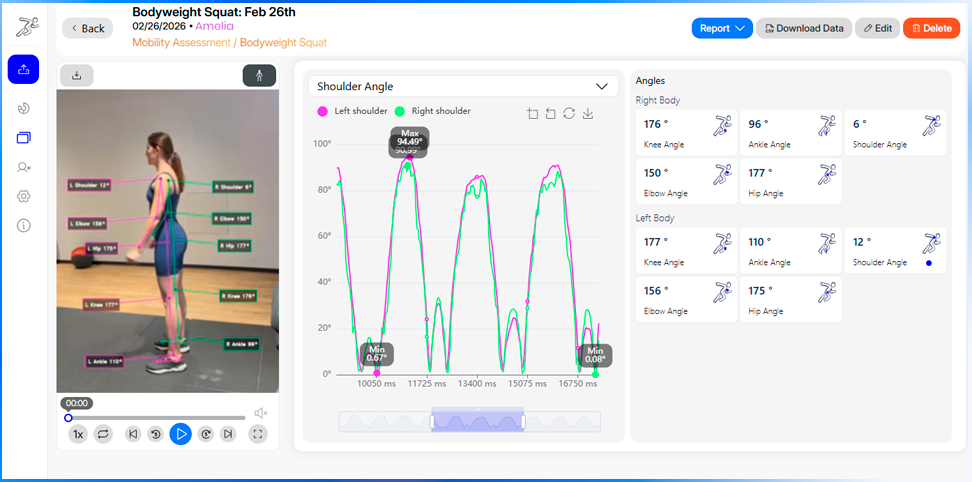
Image 6: A single video generates a detailed biomechanical report, providing objective movement data without traditional lab equipment.
For the coach, that supports more targeted programming decisions. For the PT, it enables consistent documentation and tracking over time. For the rehab specialist, it provides additional data to help inform return-to-play decision-making.
The Takeaway
Amelia's squat isn't bad. It's informative. It tells us exactly where she needs to improve, combining observation with objective data.
- Inconsistent hip range of motion? → Work on motor control.
- 11.7° asymmetry? → Consider unilateral strengthening.
- 40° trunk lean? → Explore ankle mobility and strength distribution.
- Butt wink? → Monitor lumbopelvic control under increasing load.
For coaches: you get a training roadmap.
For PTs: you get structured movement insights.
For rehab specialists: you get additional data to support decision-making.
All from a simple video capture using AiKYNETIX.
Final Line
That's the power of accessible biomechanics. Movement analysis, finally within reach.
Want more tips like this?
📬 Subscribe to our newsletter for more practical guides!
📊 Start your free trial at aikynetix.app
📥 Got questions? Drop us a line: antoine.mattier@aikynetix.com
Find us in the socials:
Facebook | Instagram | X | Telegram | LinkedIn | Strava | YouTube