Running Mechanical Power: What It Really Tells Us About Efficiency
Running power reveals how efficiently you move - not just how fast. This guide breaks down vertical oscillation, braking, and contact mechanics, and how normalized power (W/kg) tracks real progress.
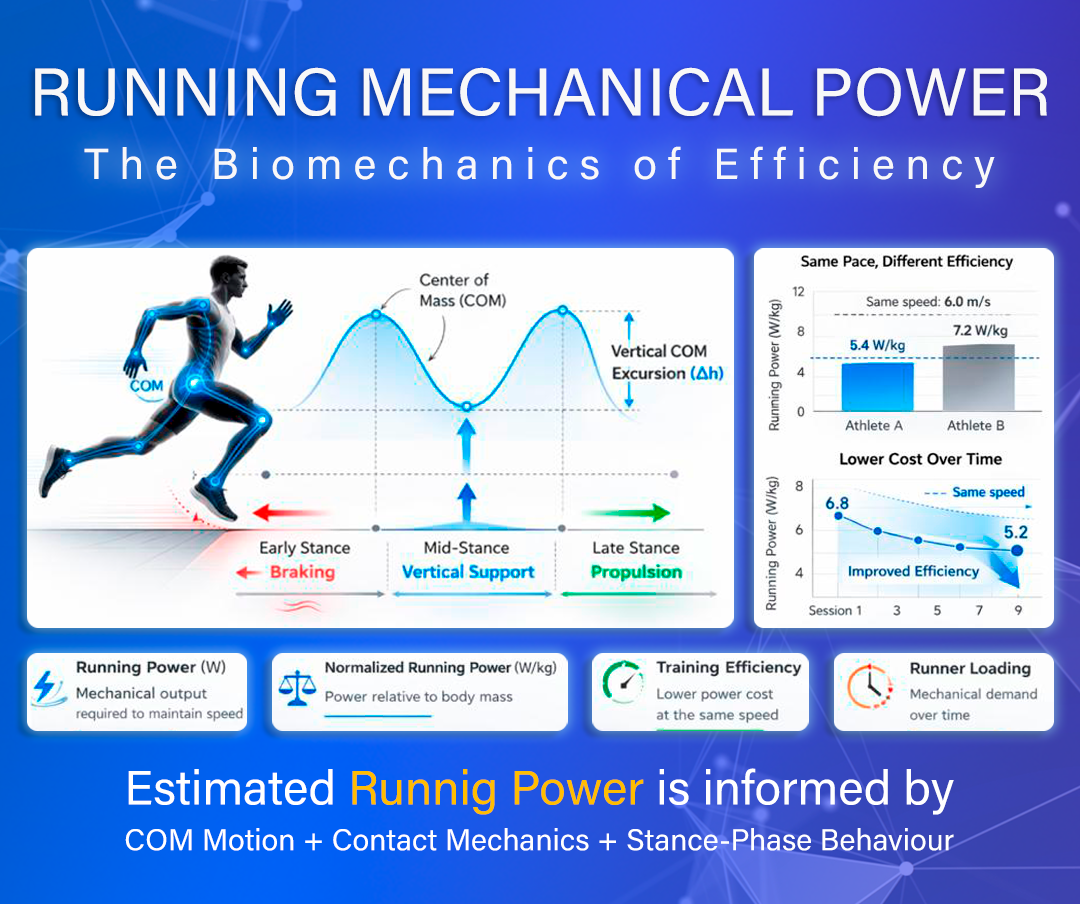
Running power reveals how efficiently you move - not just how fast. This guide breaks down vertical oscillation, braking, and contact mechanics, and how normalized power (W/kg) tracks real progress.
Why This Metric Matters
Pace alone doesn’t tell you how efficiently an athlete is moving. Two runners can run the same speed, yet one might be working noticeably harder to maintain it.
Running power helps answer a more useful question: how much mechanical work is this athlete producing to hold that pace?
Normalized running power (watts per kilogram, or W/kg) makes that comparison fairer across athletes of different body sizes. It’s one of the few metrics that links movement quality directly to mechanical cost.
The Mechanics Behind the Metric
Running power reflects the work required to keep moving forward. In biomechanical terms, it captures three main contributors:
| COMPONENT | WHAT IT MEANS | WHY IT MATTERS |
| Vertical oscillation | The center of mass rises and falls with each step. Extra bounce increases the cost of running. | A runner can look smooth but still waste energy moving up instead of forward. |
| Early-stance braking | Forward momentum slows briefly when the foot contacts the ground ahead of the center of mass. | Higher braking usually means more work is needed later in the stride to regain speed. |
| Contact behavior | Step rate, contact time, and stride length shape how force is managed through each step. | These variables help explain why the same athlete can become more or less efficient over time. |
The visualization below illustrates how center-of-mass motion, early-stance braking, and contact mechanics integrate to estimate mechanical output and track efficiency trends over time.
How to Use Running Power in Practice
- Track efficiency at a fixed pace. If pace stays the same while running power (or W/kg) drops, the athlete is moving more efficiently.
- Compare athletes fairly. Absolute power (watts) tells you total output. Normalized power (W/kg) helps compare mechanical demand across athletes of different sizes.
- Connect form to cost. Higher power at the same speed may reflect excessive vertical motion, braking, fatigue, or rhythm issues.
- Guide return-to-run progressions. Power trends help show whether an athlete is restoring efficient movement, not just tolerating speed.
- Support coaching conversations. Instead of saying "you look heavy," you can ask: is the athlete paying for speed with extra bounce, braking, or inefficient contact?
Simple Examples
| SCENARIO | SPEED | RUNNING POWER | INTERPRETATION |
| Athlete A | 14 km/h | 5.8 W/kg | Lower mechanical cost at the same pace. |
| Athlete B | 14 km/h | 6.6 W/kg | Higher mechanical cost; review braking, bounce, or contact behavior. |
Same athlete example
Week 1: 14 km/h at 7.2 W/kg.
Week 6: 14 km/h at 6.3 W/kg.
Pace is unchanged, but the mechanical cost is lower - a clear sign of improved efficiency.
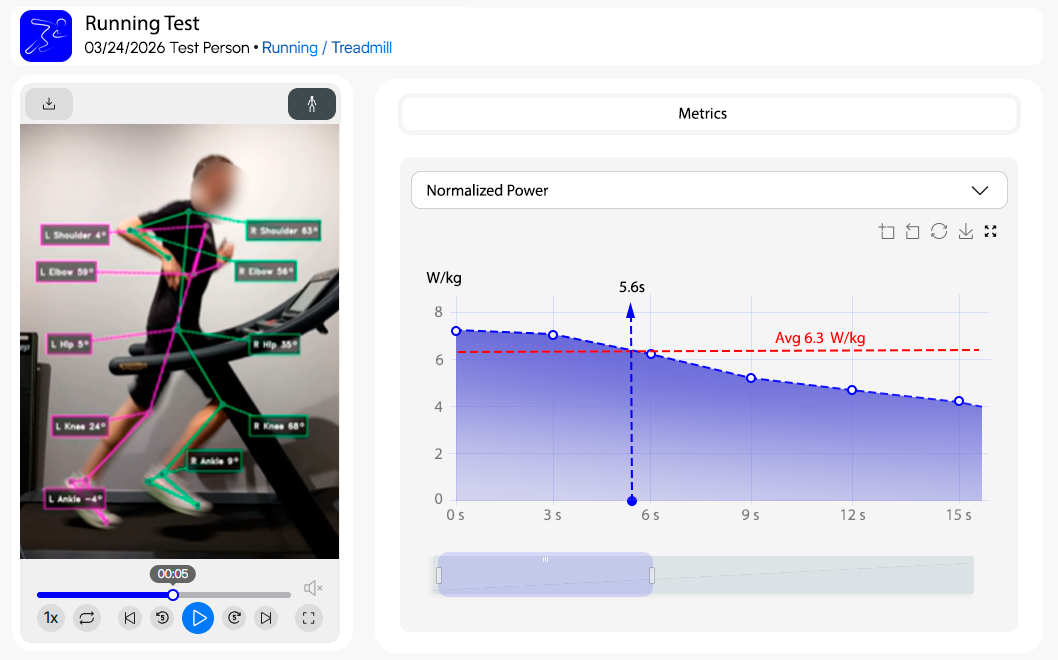
Fig 1. A sample running power curve showing mechanical output over time. Flat or decreasing power at the same pace suggests improved efficiency.
What AiKYNETIX Brings to the Picture
Running power in the lab is measured with force plates and motion capture. But those tools aren’t practical for day-to-day coaching or field testing.
AiKYNETIX estimates running power and normalized running power from a single camera using:
- Center-of-mass motion
- Contact timing
- Mechanics-based modeling
The platform doesn’t measure force directly - it estimates mechanical work based on how the body moves through each stride.
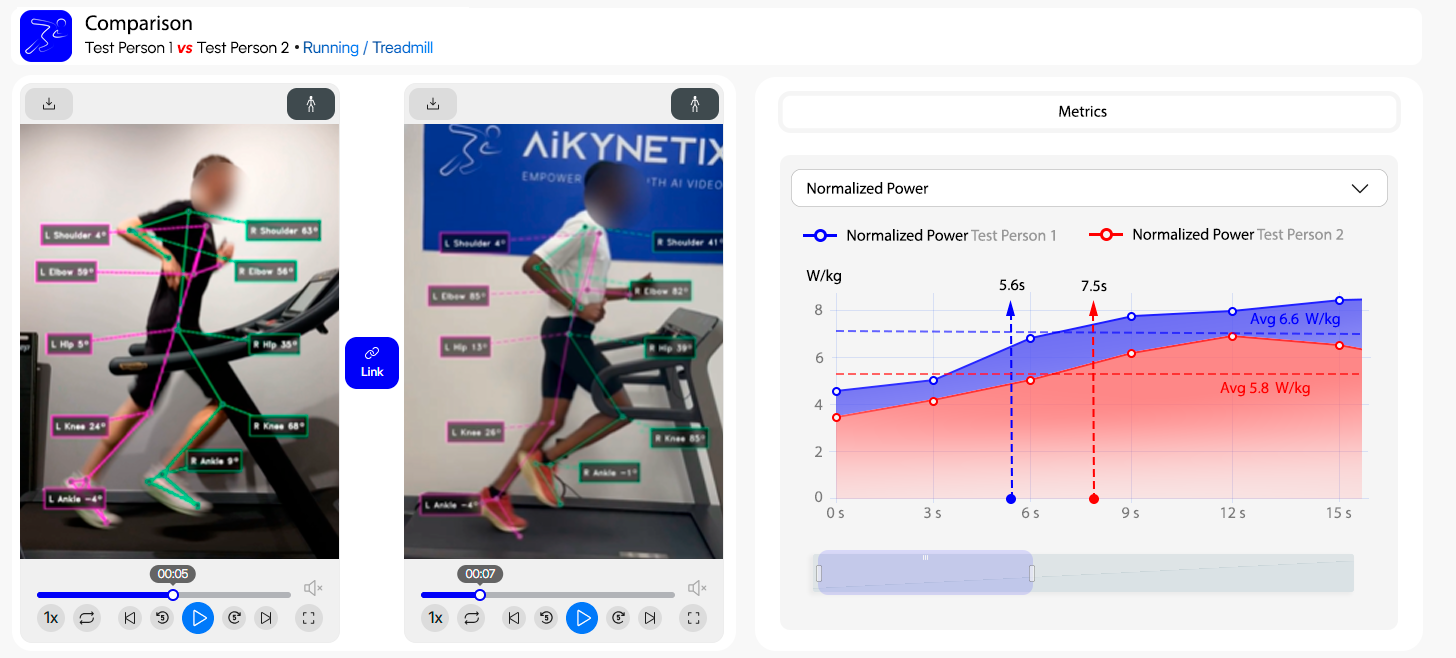
Fig 2. Normalized running power allows fair comparison across athletes of different sizes and helps track efficiency changes in the same athlete.
Final Takeaway
Efficiency is not only speed. It’s the mechanical work required to maintain speed.
Running power gives coaches a direct window into that cost - and normalized power makes it useful across athletes of all sizes. Whether you're tracking fatigue, guiding return to running, or helping an athlete move more smoothly, power tells a more complete story than pace alone.
Want more tips like this?
📬 Subscribe to our newsletter for more practical guides!
📊 Start your free trial at aikynetix.app
📥 Got questions? Drop us a line: info@aikynetix.com
Find us in the socials:
Facebook | Instagram | X | Telegram | LinkedIn | Strava | YouTube