Introduction
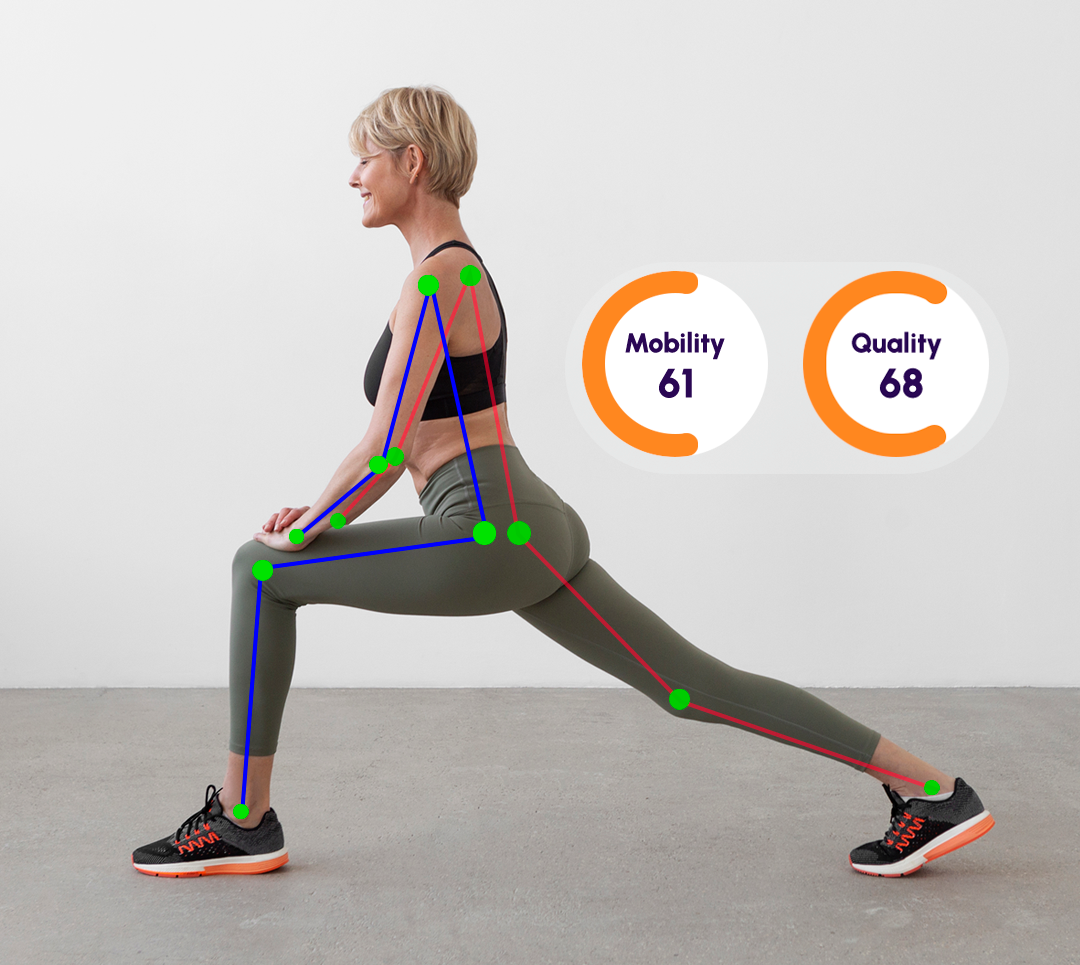
Mobility is a cornerstone of human movement. Unlike flexibility, which describes the passive ability of muscles to stretch, mobility refers to the active range of motion (ROM) a person can achieve and control across joints. It integrates joint health, muscle strength, neuromuscular control, and coordination. Assessing mobility is critical in sports performance, rehabilitation, and daily functional health.
What Is General Mobility?
General mobility refers to the capacity of the major joints of the body — shoulders, hips, knees, ankles, trunk — to move through their full range while maintaining control and stability. It reflects not only how far a joint can move but also whether movements are symmetrical and efficient.
Why Assess Mobility?
Mobility assessment is used by:
The benefits of assessing mobility include:
- Athletes and coaches to identify movement limitations that affect performance.
- Physiotherapists and rehabilitation specialists to track progress and reduce risk of re-injury.
- Trainers and fitness professionals to design corrective exercise programs.
- Corporate wellness specialists to evaluate workplace ergonomics and prevent musculoskeletal strain.
The benefits of assessing mobility include:
- Early detection of asymmetries and compensations.
- Prevention of injuries caused by restricted or imbalanced movement.
- Improved movement efficiency, posture, and performance outcomes.
How to Assess General Mobility
Traditional methods include manual goniometry, movement screening protocols (like the Functional Movement Screen), and clinical observation. However, these can be subjective and time-consuming.
Modern Digital Assessment – AiKYNETIX
Today, platforms such as AiKYNETIX provide video-based, automated biomechanical analysis, making mobility assessment more objective and accessible. The platform generates structured reports with quantified mobility scores, joint angles, and asymmetry measures.
Modern Digital Assessment – AiKYNETIX
Today, platforms such as AiKYNETIX provide video-based, automated biomechanical analysis, making mobility assessment more objective and accessible. The platform generates structured reports with quantified mobility scores, joint angles, and asymmetry measures.
Examples from AiKYNETIX Reports
1. Overhead Squat Report
The overhead squat is considered a gold-standard screening test for functional mobility because it challenges multiple joints simultaneously. AiKYNETIX automatically measures:
Here are screenshots of graphs from the AiKYNETIX Web Platform after analyzing the squat exercise, along with explanations of how to interpret them:
- Mobility Score (%) and Quality Score (%),
- Hip flexion and abduction angles (left, right, asymmetry),
- Knee flexion and ankle dorsiflexion angles.
Here are screenshots of graphs from the AiKYNETIX Web Platform after analyzing the squat exercise, along with explanations of how to interpret them:
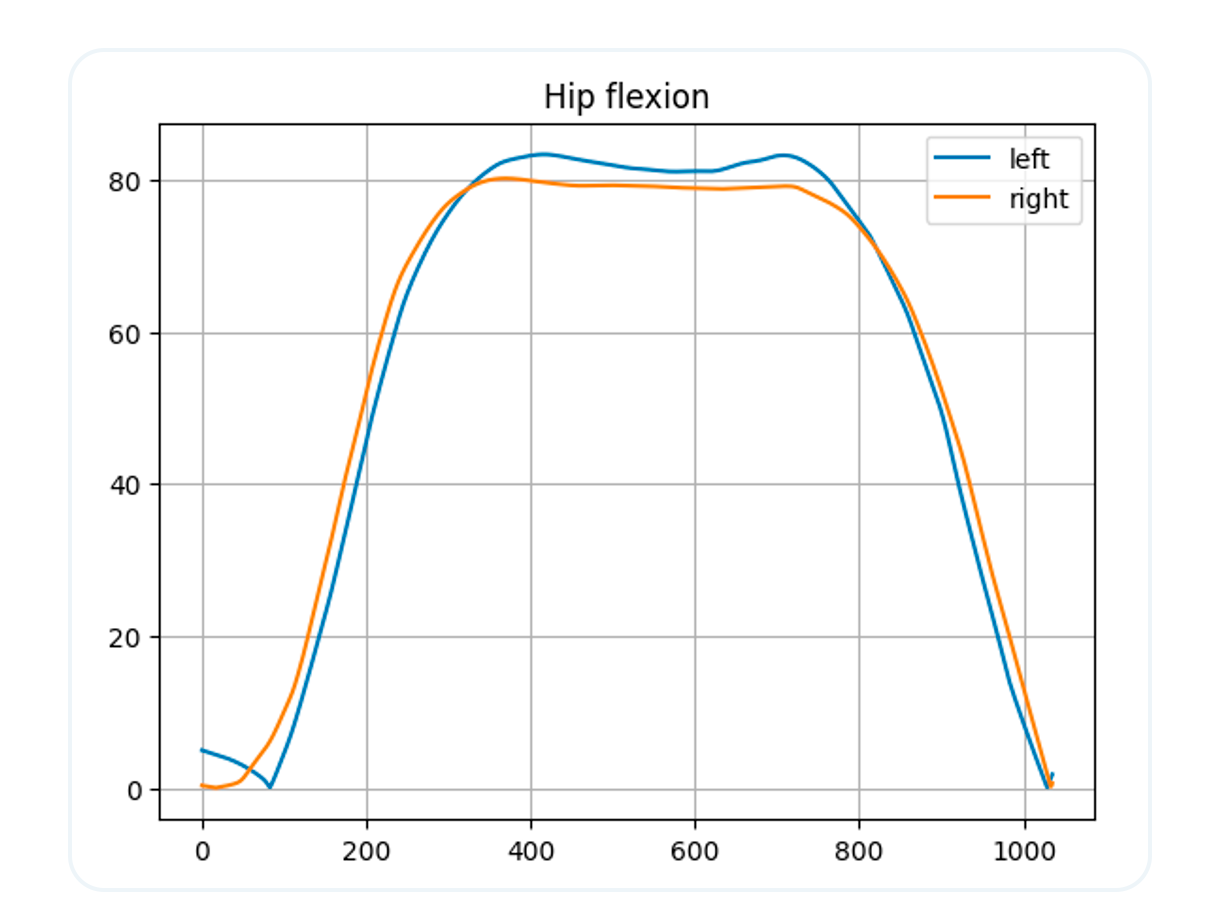
📊 Hip Flexion Angles – The left and right curves should overlap. Optimal maximum hip flexion is between 90° and 130°. If one side is limited, it indicates asymmetry or mobility restriction.
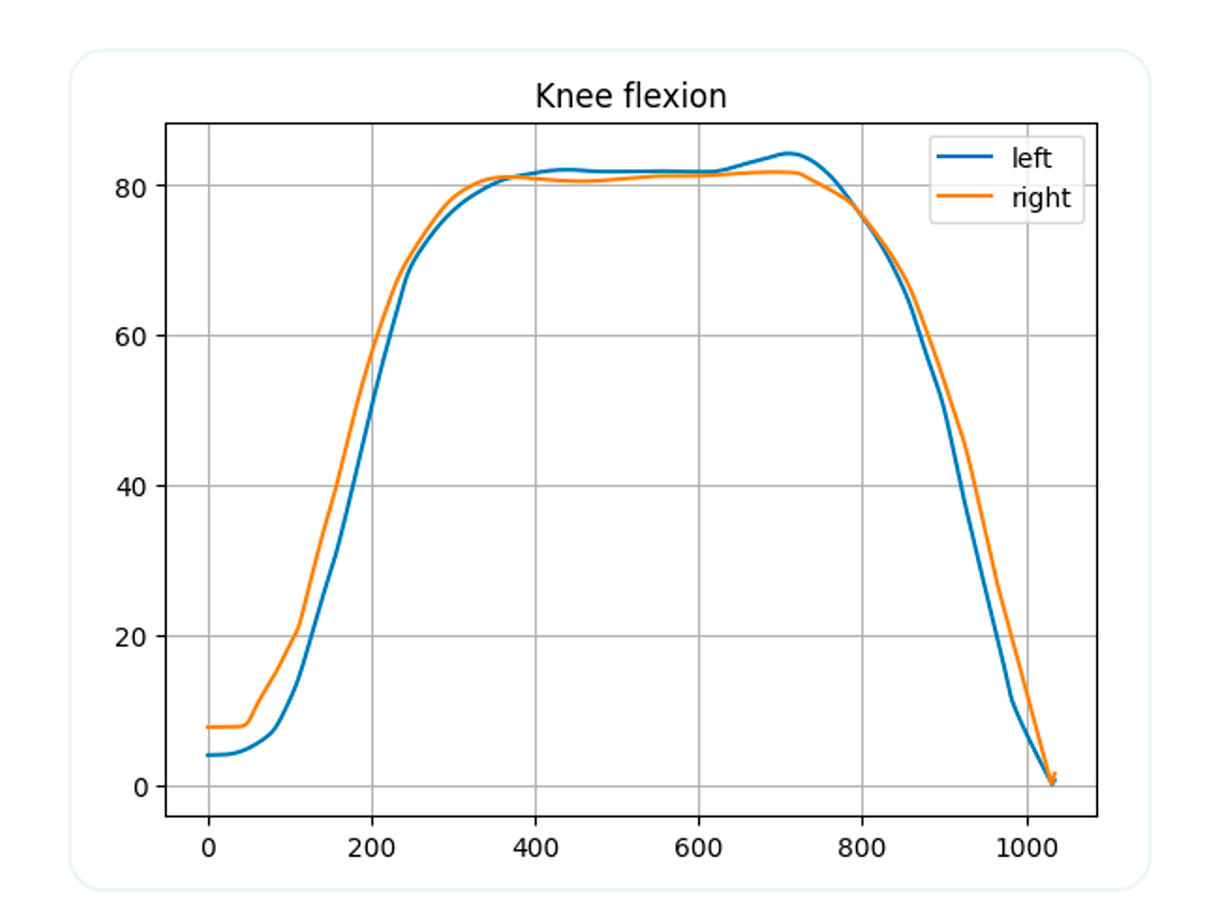
📊 Knee Flexion Angles – Both sides should ideally reach 90°–140°. A reduced curve may signal limited knee ROM, while divergence suggests left–right imbalance.
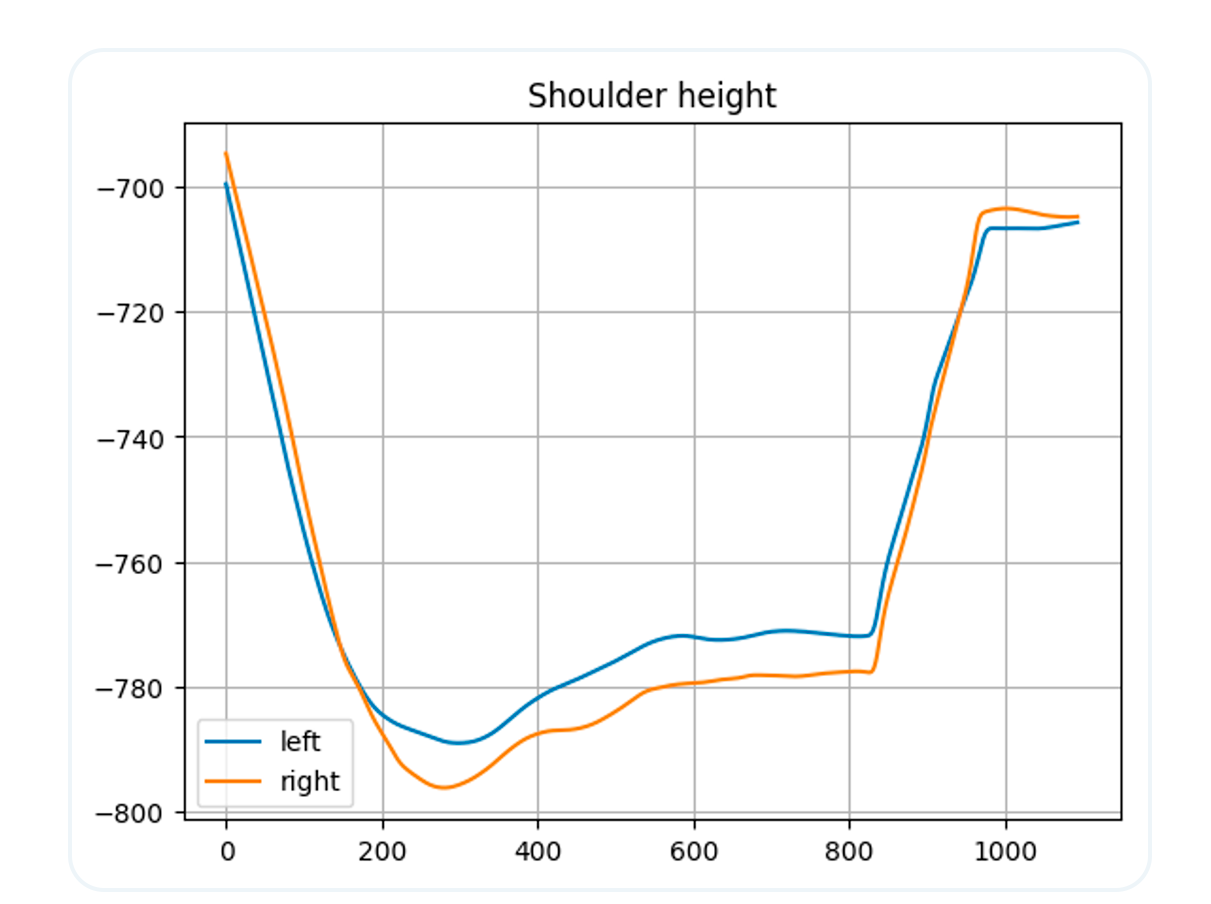
📊 Shoulder Height Symmetry – Both shoulders should remain level throughout the squat. Separation of the lines indicates compensations in the trunk or shoulder mobility.
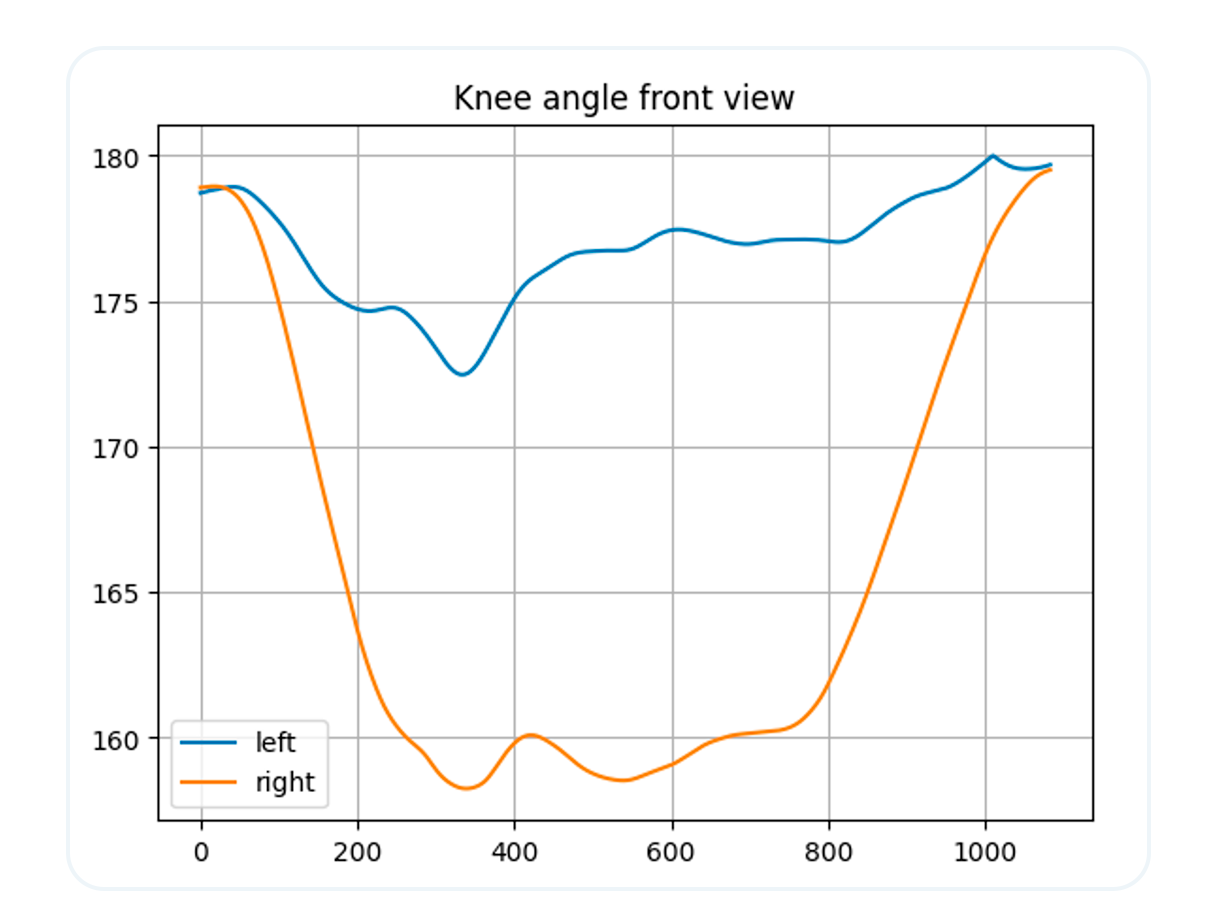
📊 Front-View Knee Angles – Ideally, the graph should show lines close to 180°, reflecting straight legs without valgus (knees caving in) or varus deviations.
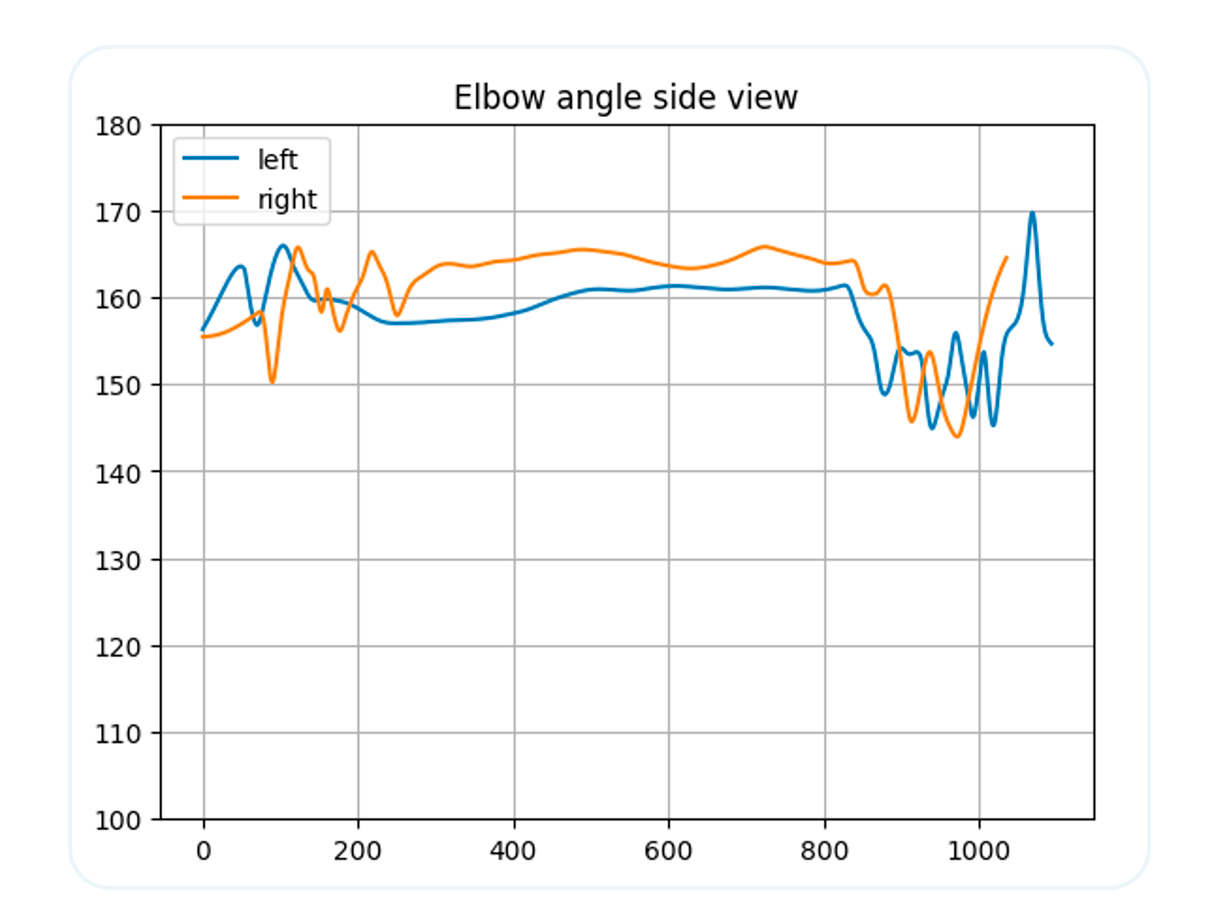
📊 Elbow Angles – During the overhead squat, elbows should stay close to 180°. Dropping arms forward suggests restricted shoulder mobility or thoracic extension.
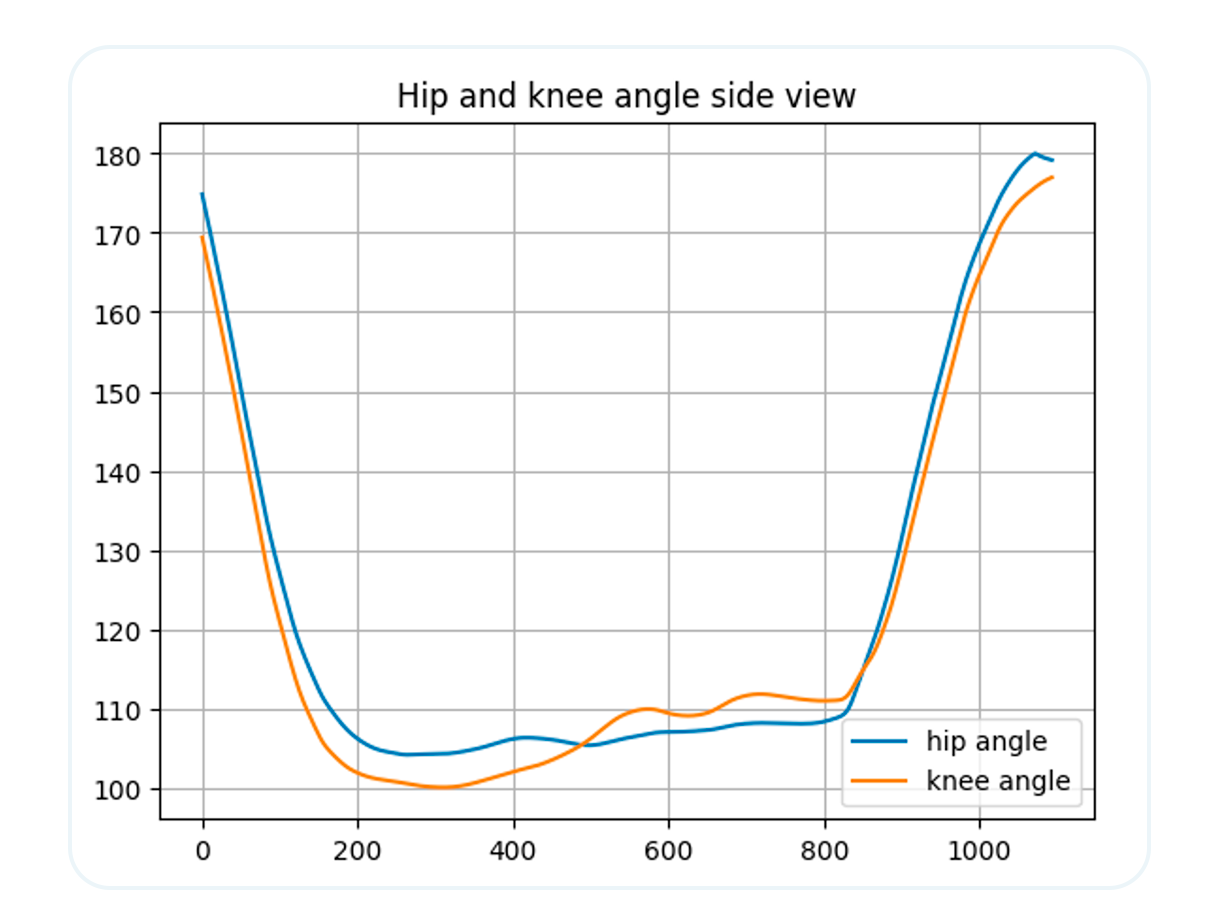
📊 Hip vs. Knee Angle Comparison – If the two angles remain close, the torso stays parallel to the shin — an indicator of correct technique. Divergence may reveal compensations.
Together, these graphs allow practitioners to detect compensations such as knee valgus, limited ankle dorsiflexion, or excessive trunk lean — insights essential for corrective exercise planning.
🔗 More examples of Overhead Squat graphs are available in the file: Overhead Squat Graphics.docx
🔗 More examples of Overhead Squat graphs are available in the file: Overhead Squat Graphics.docx
2. Joint Angle Mobility Report
This report isolates each joint to provide precise ROM values:
- Shoulder, elbow, hip, knee, ankle, and trunk angles.
- Side-to-side comparisons for symmetry.
- Deviations from normative ranges.
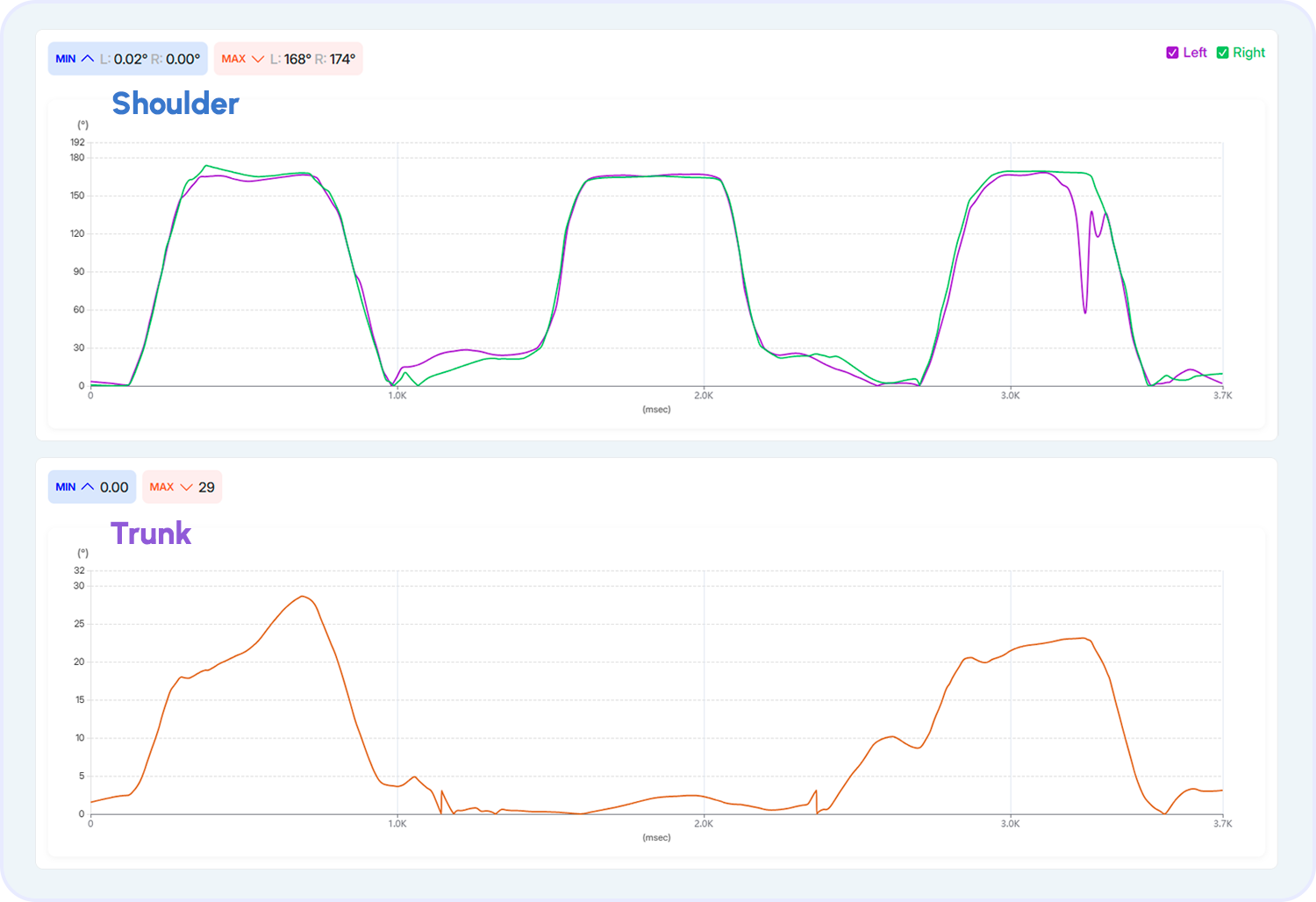
📊 Shoulder rotation and trunk control - Joint-by-joint analysis highlights upper-body mobility.
What You Can Do with the Results
With AiKYNETIX data, users can:
- Identify asymmetries (e.g., left hip vs. right hip flexion).
- Track changes over time after training or rehabilitation.
- Set measurable goals for improving joint range and movement efficiency.
- Apply targeted interventions, such as mobility drills, stretching, or strength training, based on the specific joint limitation.
Who Needs This?
- Professional and amateur athletes who want to enhance performance.
- Rehabilitation patients needing precise monitoring of progress.
- Trainers and coaches designing corrective or performance programs.
- Health-conscious individuals aiming to prevent musculoskeletal issues.
Conclusion
General mobility assessment is more than checking flexibility — it is a holistic evaluation of how the body moves. Accurate assessment empowers athletes, clinicians, and everyday individuals to move better, train smarter, and prevent injury.
With modern tools like AiKYNETIX, mobility assessment becomes objective, measurable, and actionable, offering detailed reports such as the Overhead Squat and Joint Angle Mobility analysis. These insights form the foundation for healthier movement, whether on the field, in the gym, or at the workplace.
With modern tools like AiKYNETIX, mobility assessment becomes objective, measurable, and actionable, offering detailed reports such as the Overhead Squat and Joint Angle Mobility analysis. These insights form the foundation for healthier movement, whether on the field, in the gym, or at the workplace.
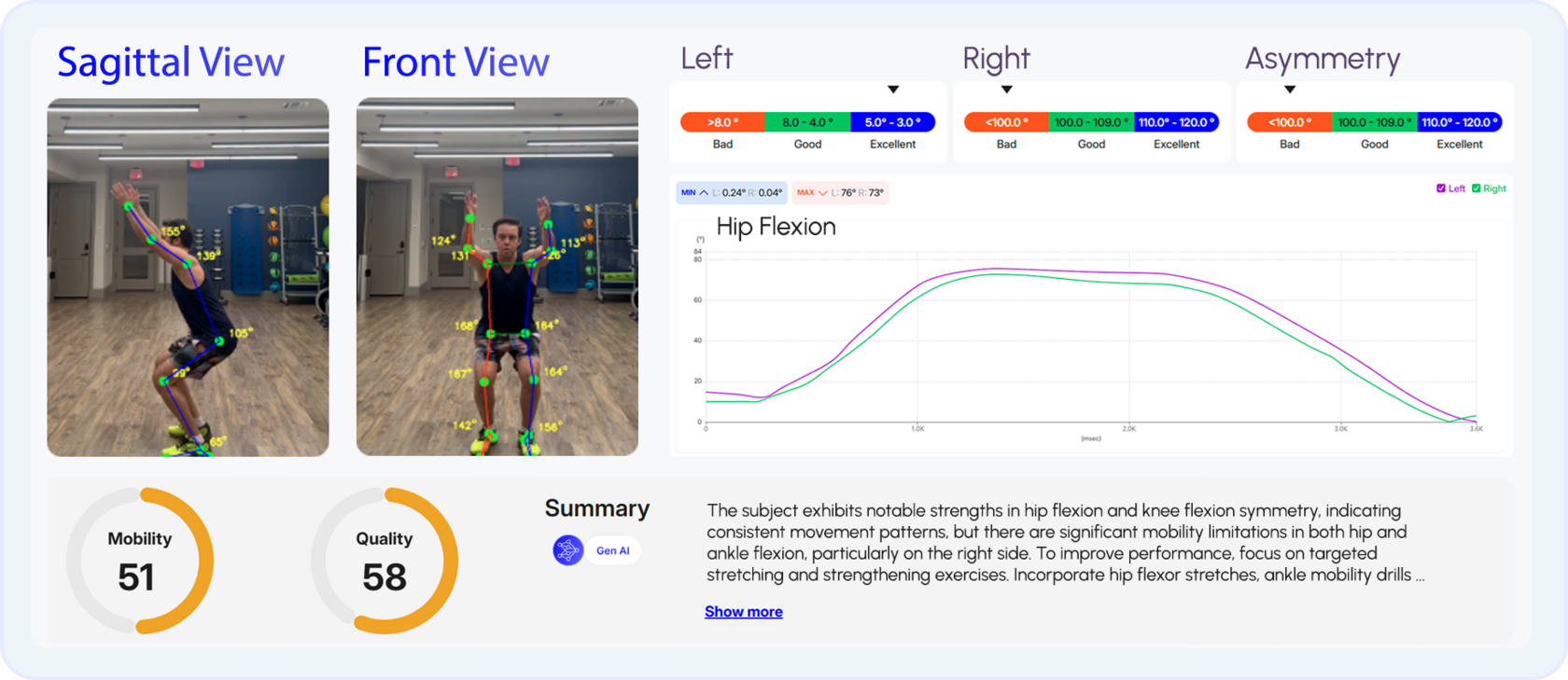
📊Mobility Score vs. Quality Score - Mobility and Quality Scores provide a quick overview of movement efficiency and control.
Explore more drills and insights in the AiKYNETIX Knowledge base or start your free trial at aikynetix.app
Want more tips like this?
📬 Subscribe to our newsletter for more practical guides!
📥 Got questions? Drop us a line: info@aikynetix.com
Find us in the socials:
Facebook | Instagram | X | Telegram | LinkedIn | Strava | YouTube
Want more tips like this?
📬 Subscribe to our newsletter for more practical guides!
📥 Got questions? Drop us a line: info@aikynetix.com
Find us in the socials:
Facebook | Instagram | X | Telegram | LinkedIn | Strava | YouTube