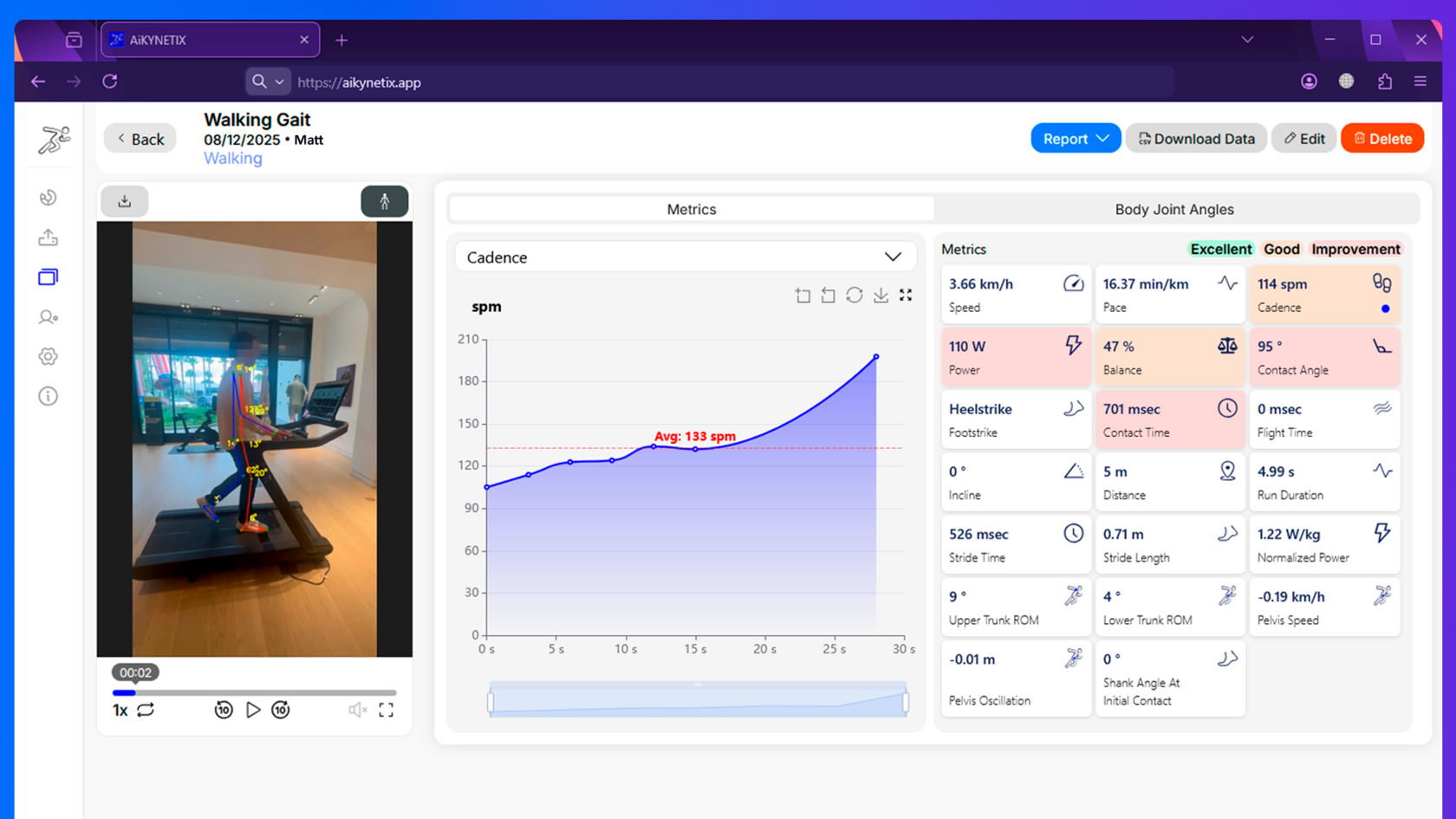
Walking is often treated as background movement, yet each step encodes balance control, impact management, propulsion, and joint coordination. This two-page briefing explains why walking matters for athletes and rehabilitation, then shows how AiKYNETIX turns video into actionable gait metrics.
Walking is a repetitive, whole-body task: the nervous system stabilizes the head and trunk while the lower limbs alternately support and advance the body’s center of mass. Because walking is highly practiced, small changes in timing, symmetry, and posture can reveal early compensation—useful in sport (readiness, fatigue, injury risk) and in rehabilitation (function, confidence, motor learning).
A small set of mechanisms explains most gait patterns that matter in practice. Load acceptance describes how the ankle, knee, and hip absorb impact while the pelvis stays stable. Forward progression describes the smooth transition over the stance foot and the ability to generate propulsion late in stance. Step placement shapes braking versus rolling: landing too far in front increases braking demand; landing closer under the body supports economy. Finally, symmetry and posture matter—persistent left–right loading differences and trunk lean can redirect stress toward the low back, hips, or calves.
Quick glossary: Cadence (steps/min), contact time (ms), stride time (ms), stride length (ft or m), balance (%), contact angle (deg).
AiKYNETIX’s web platform makes these mechanisms measurable from standard video. For walking, it reports session outcomes (speed, pace, cadence, power), mechanics indicators (contact time, stride timing/length, footstrike), and stability/efficiency signals (balance and contact angle). Used consistently, this metric set supports rapid screening, progress tracking, and clearer communication between athletes, coaches, and clinicians.
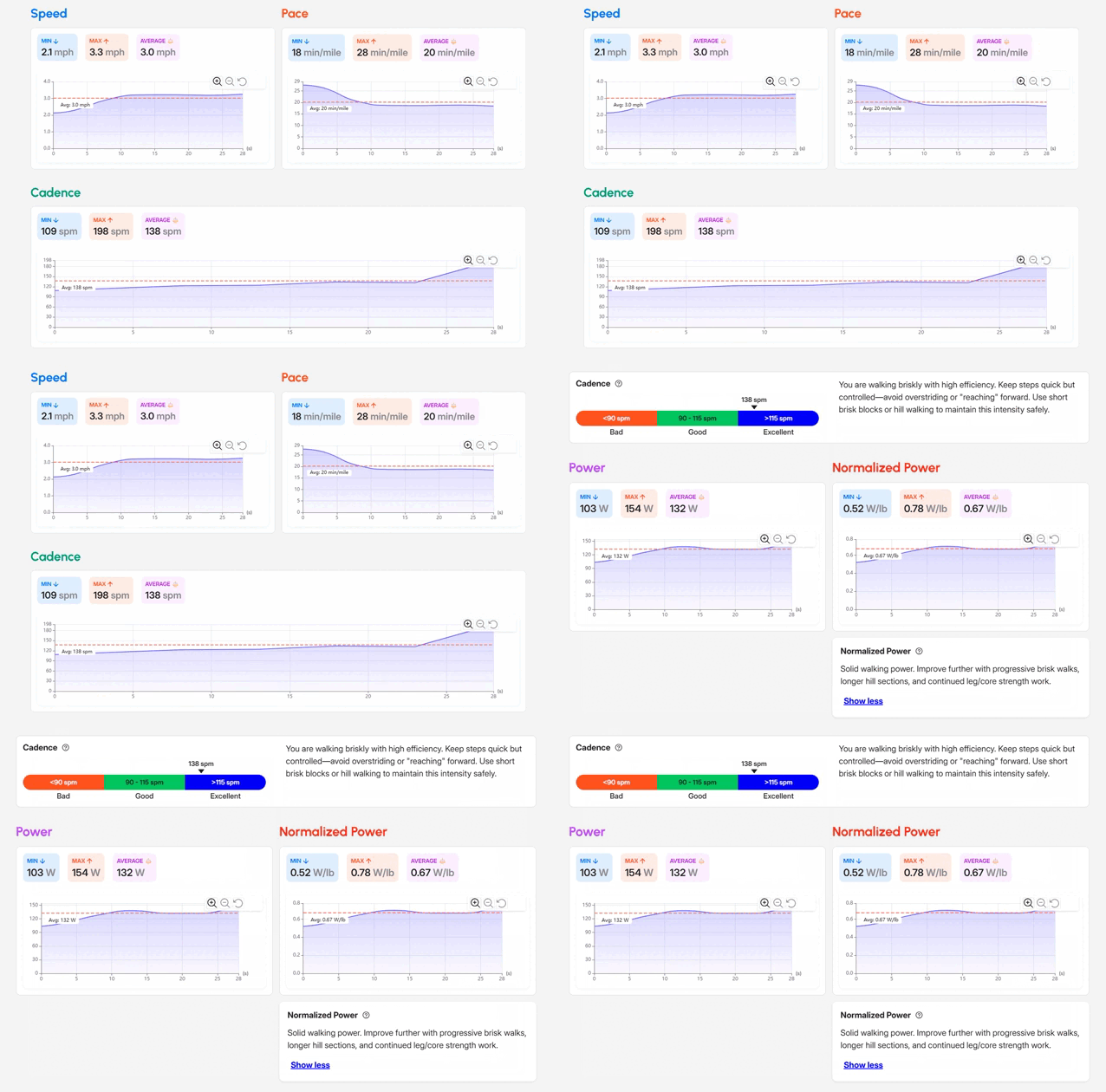
FIGURE 1. AiKYNETIX Session Summary Dashboard.
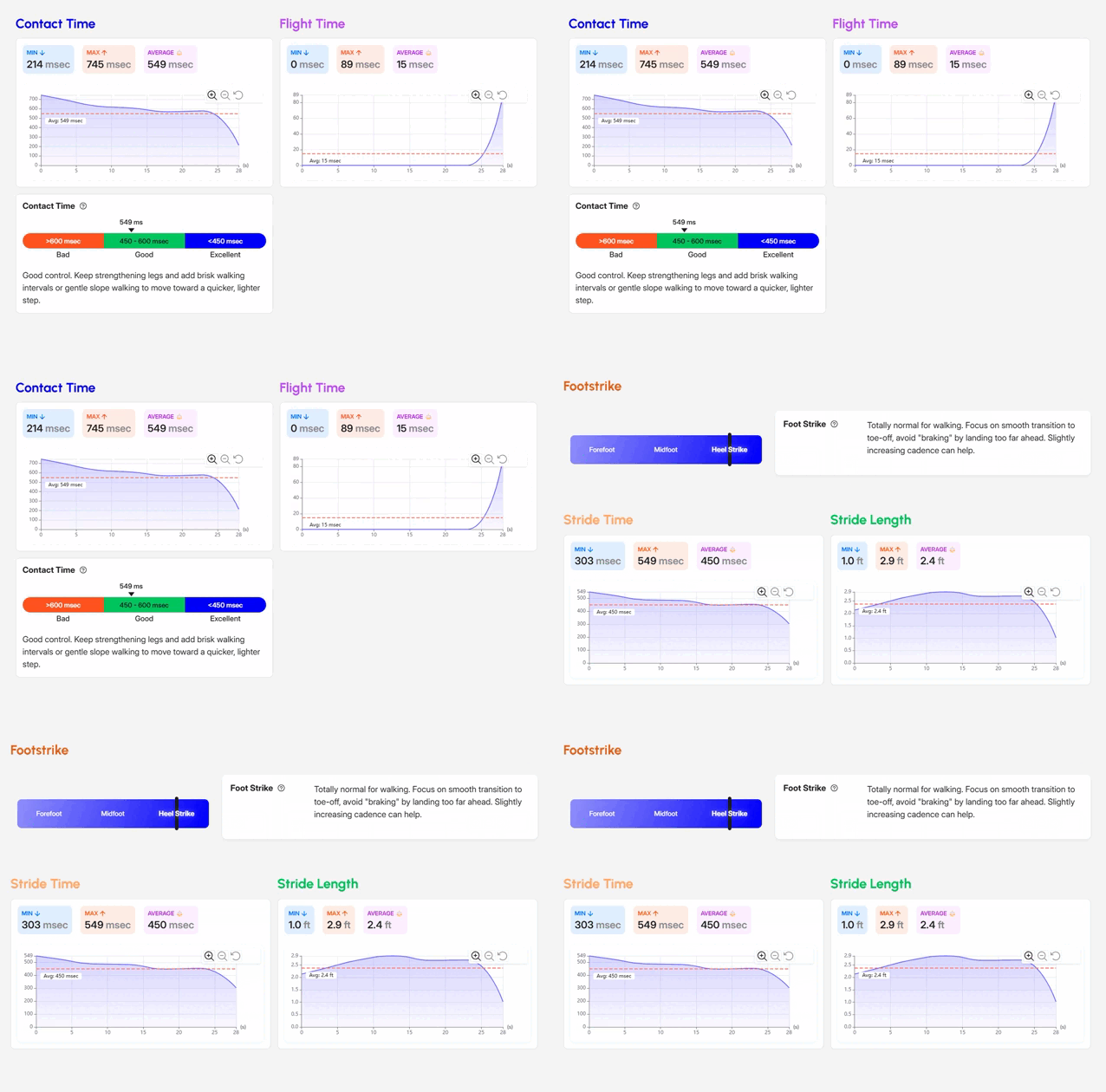
FIGURE 2. Walking mechanics panel.
The practical goal is simple: use the report to identify a small number of high-impact levers, then re-test after training or treatment. The case example below illustrates the workflow.
Case example: from numbers to decisions (Walking Analysis sample session)
Session outcomes describe the overall demand: average speed is 3 mph with an average pace of 20 min/mile. Cadence averages 138 spm, indicating brisk rhythm. Power averages 132 W, and normalized power averages 0.67 W/lb.
Mechanics explain how that output is produced. Contact time averages 549 ms and footstrike is heel strike. Stride time averages 450 ms and stride length averages 2.4 ft, a combination that matches quick step rhythm with moderate step length. Together, cadence, stride time, and contact time summarize the session’s locomotor timing strategy.
Stability and efficiency indicators provide the most actionable leverage. Balance averages 52% (near-symmetry with a slight right-side bias). Contact angle averages 93 degrees, a pattern interpreted within AiKYNETIX as potential overreaching/braking—an opportunity to refine step placement and encourage a smoother heel-to-toe roll-through.
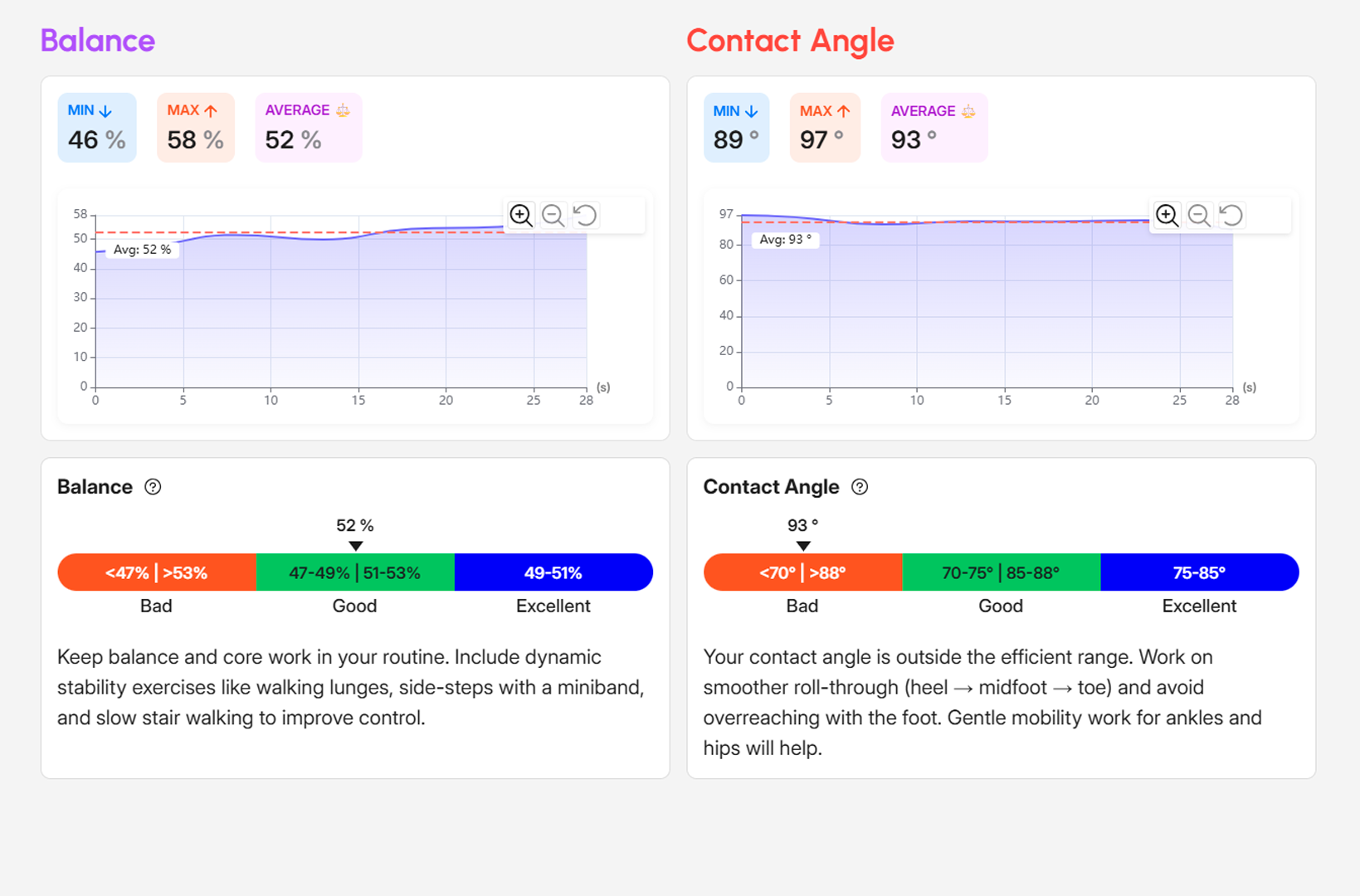
FIGURE 3. Balance + Contact Angle view.
Joint-angle trends help connect “what” to “why.” The report highlights left ankle and hip patterns: the left ankle angle ranges from 4.59 degrees to a peak of 23.19 degrees, returning to 4.41 degrees by the end of the cycle. The left hip angle decreases from 23.02 degrees to 5.32 degrees across the gait cycle, and a decline in posture angle is noted. In practice, patterns consistent with restricted hip extension often coincide with altered late-stance mechanics and compensatory trunk strategies.
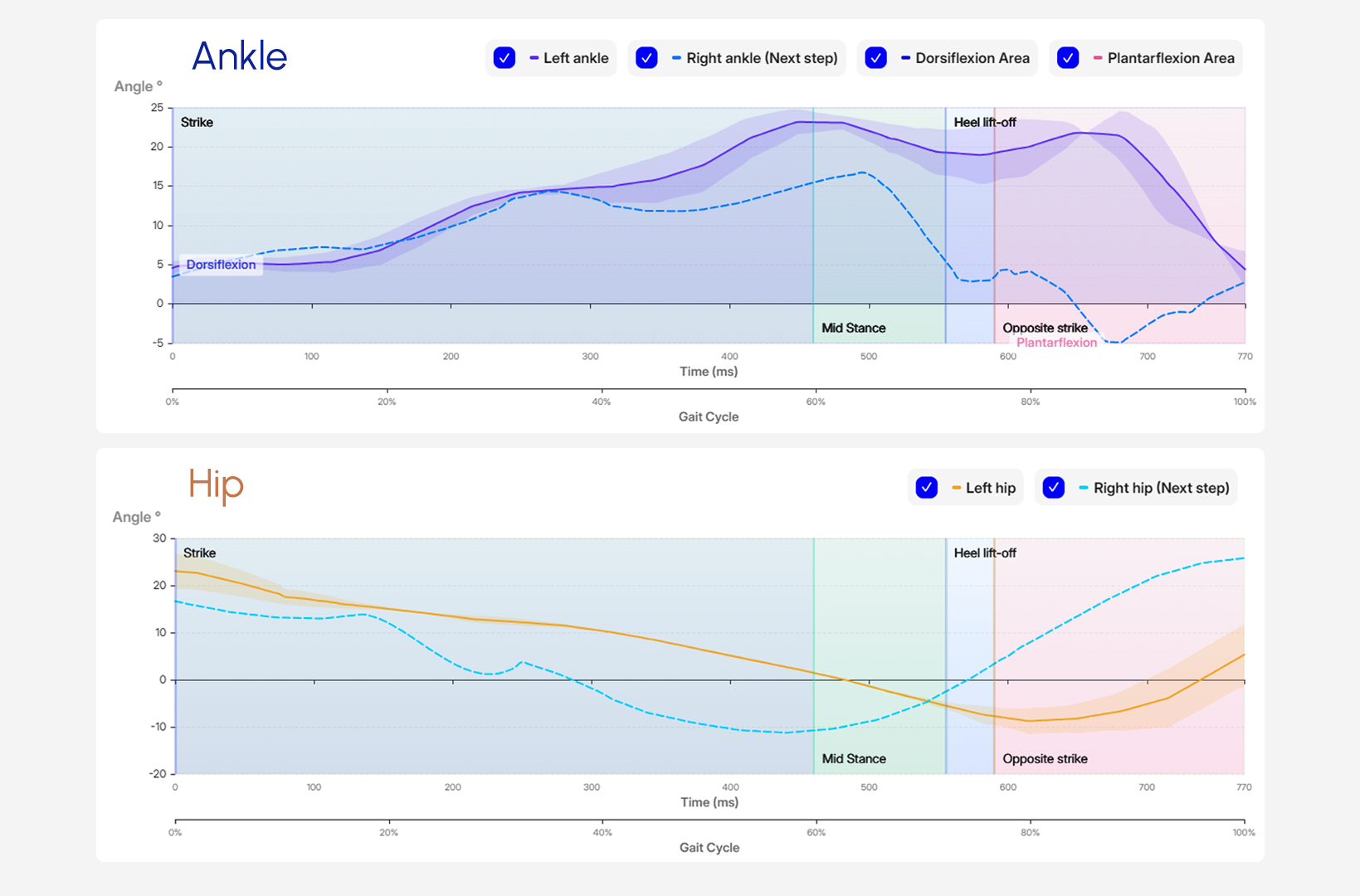
FIGURE 4. Joint-angle curves.
Action plan (minimal, repeatable):
- Technique cue: keep steps quick and quiet; avoid reaching the foot far ahead at contact.
- Strength support: calf raises, hip extensor strengthening, and step-ups to reinforce late-stance propulsion.
- Stability work: single-leg stands and controlled step-ups to support symmetry and balance.
- Progression: add short brisk intervals or gentle hills to raise power without degrading mechanics.
- Re-test: repeat the same capture setup after 2–4 weeks and compare contact angle, balance, and timing metrics.
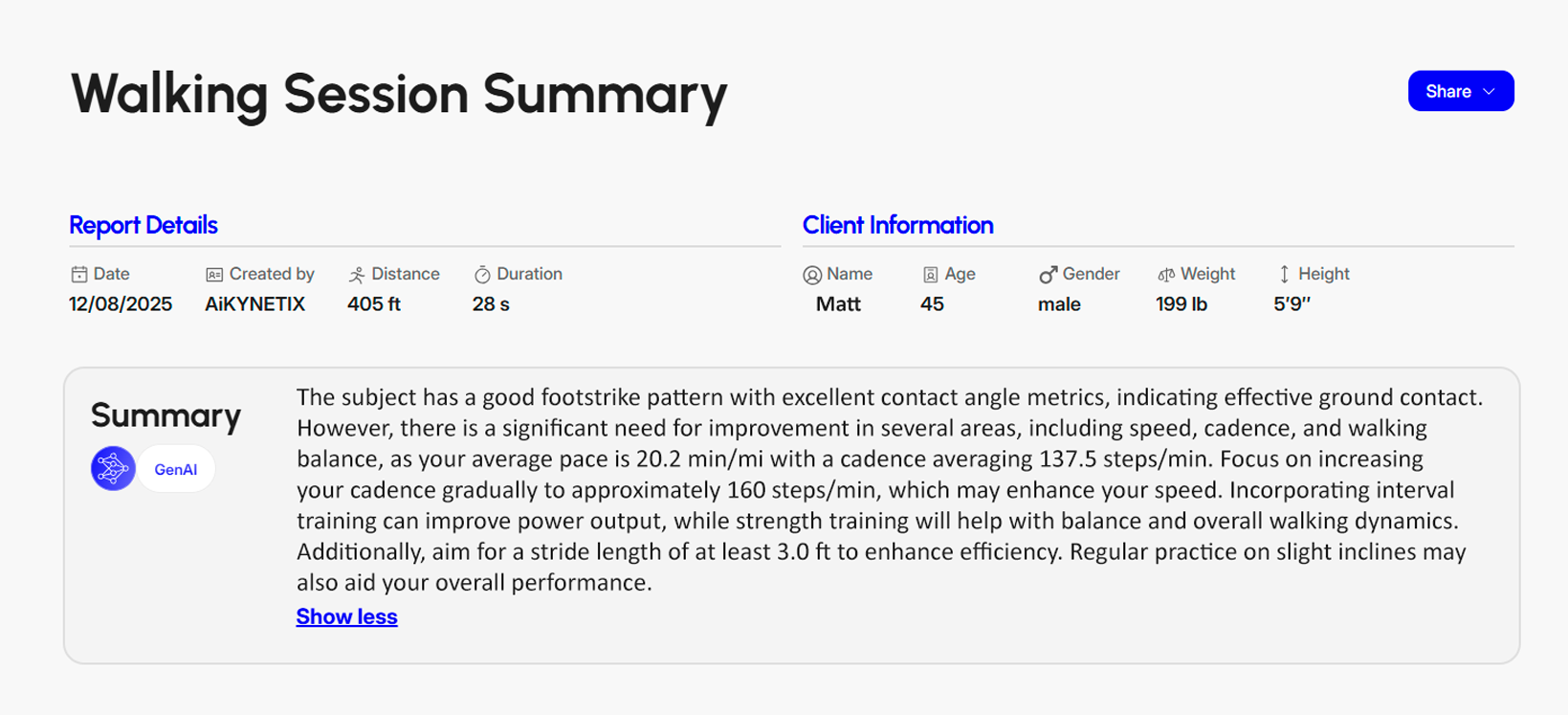
FIGURE 5. Report export view.
When captured consistently, walking becomes a high-frequency measurement of movement health: it is easy to collect, sensitive to change, and directly tied to performance and function. Video-based analysis can extend gait feedback beyond the motion lab and into daily coaching and clinical decision-making.
Want more tips like this?
📬 Subscribe to our newsletter for more practical guides!
📊Start your free trial at aikynetix.app
📥 Got questions? Drop us a line: info@aikynetix.com
Find us in the socials:
Facebook | Instagram | X | Telegram | LinkedIn | Strava | YouTube
📬 Subscribe to our newsletter for more practical guides!
📊Start your free trial at aikynetix.app
📥 Got questions? Drop us a line: info@aikynetix.com
Find us in the socials:
Facebook | Instagram | X | Telegram | LinkedIn | Strava | YouTube